How to Play Crossword Puzzles: Rules & Strategies
Introduction
If you've ever stared at a blank crossword grid wondering where to even begin, you're in good company. Learning how to play crossword puzzles is one of those things that sounds simple until you actually sit down with a tricky clue and realize there's a whole craft to it. Crossword puzzles have been around since 1913, and they remain one of the most popular word games in the world — and for very good reason.
Whether you're a first-timer picking up a pencil or someone who's been solving puzzles casually for years but wants to actually get better, this guide covers everything: the core rules, proven strategies, common mistakes to avoid, and the best free crossword games you can play online right now. No fluff, just what actually works.
What Are Crossword Puzzles?
Crossword puzzles are grid-based word games where you fill in white squares with letters to form words. Each word runs either Across (left to right) or Down (top to bottom), and the words intersect at shared letters. Every word is hinted at by a clue — typically a definition, wordplay, a fill-in-the-blank phrase, or in cryptic puzzles, a riddle.
The grids come in all sizes. A standard American newspaper crossword is 15×15 squares for daily puzzles and 21×21 for Sunday editions. Mini crosswords are usually 5×5. Online crosswords can be any size.
The black squares in the grid separate words and are placed symmetrically — rotate a standard crossword 180 degrees and the black-and-white pattern looks identical. This isn't an accident: it's a long-standing design convention that signals a well-constructed puzzle.
What makes crosswords genuinely compelling is the double layer of challenge. You need vocabulary, yes, but you also need pattern recognition, lateral thinking, and the ability to hold multiple hypotheses at once. A wrong letter in one word cascades into errors in every word that crosses it.
How to Play Crossword Puzzles: The Basic Rules
The Grid and Numbering
Every white square where a word starts gets a number. That number corresponds to a clue in the Across list or the Down list (sometimes both, if a word starts at that square in both directions). The numbers run left-to-right, top-to-bottom across the grid.
When you look at a clue like 17-Across: Capital of France (5), it tells you:
- The word starts at square number 17
- It runs across (left to right)
- It has 5 letters (the number in parentheses — common in British-style puzzles)
- The answer is PARIS
Filling In Letters
You fill letters into the white squares. Simple. But here's the key rule: every letter belongs to two words simultaneously — one Across answer and one Down answer. This cross-checking is what makes crossword solving possible even when you're stuck. If you know a Down answer, some of its letters might unlock an Across clue you couldn't crack from the clue alone.
Clue Types
Not all crossword clues work the same way:
Straight clues — direct definitions. "Dog breed (6)" → BEAGLE. These are the backbone of most American-style crosswords.
Cryptic clues — each clue contains both a definition AND a wordplay element (anagram, hidden word, reversal, etc.). "Mixed up lemon for a demon (5)" → MONEL... actually MELON scrambled = LEMON rearranged → the answer is DEMON? No wait — cryptic clues are their own puzzle. They follow strict logical rules but hide them cleverly.
Fill-in-the-blank — "___ Angeles" → LOS. Usually the easiest type.
Cross-referential — "See 14-Across" — the clue directs you to another answer.
Trivia clues — "Author of Moby Dick" → MELVILLE (6).
Knowing which type of clue you're dealing with changes your solving approach entirely.
Math Crosswords
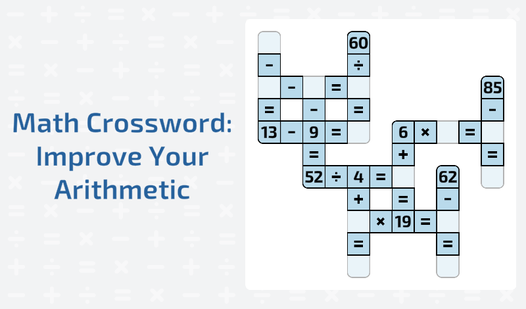
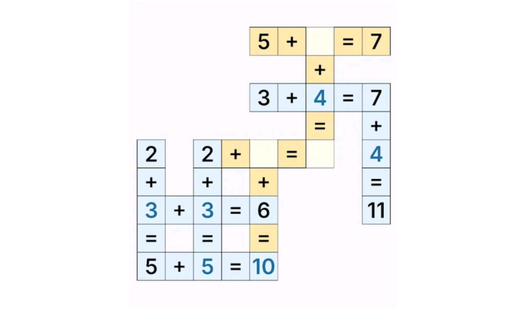
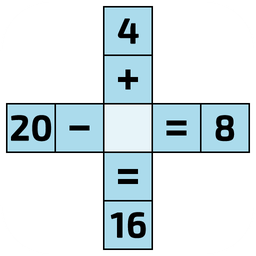
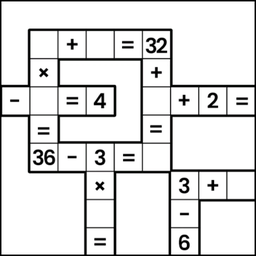
A fascinating variant worth knowing: math crosswords replace word clues with arithmetic. Instead of "Capital of France," the clue might be "7 × 8" and the answer is 56. The grid works identically, but instead of letters you fill in digits, and every row and column of numbers has to satisfy the given equations.
Math Crossword: Improve Your Arithmetic
Drag and drop number tiles into empty slots to solve complex equations in this addictive brain teaser. Math Crossword: Improve Your Arithmetic challen...
▶ Play FreeThis is genuinely great for building mental arithmetic speed. The crossword format forces you to think about numbers from multiple angles simultaneously — a digit that solves one equation also has to satisfy the crossing equation.
Math Crossword. Number Puzzle
Crosswords are usually about finding hidden words, but this unique brain teaser flips the script by turning arithmetic into your primary vocabulary. M...
▶ Play FreeStrategies That Actually Work
Start With What You Know
Never stare at clue #1-Across just because it's first. Scan all the clues and answer the ones you're certain about. Fill those in. This gives you crossing letters, which make the uncertain clues easier.
Most experienced solvers work in waves: fill in the easy ones, then use those letters to crack medium clues, then tackle the tough ones last (by which point many squares are already filled).
Use Crossing Letters Aggressively
Say you don't know what 23-Across is, but you've filled in four of its five letters from Down answers: _ A R I S. You can now make an educated guess (PARIS, MARIS, TARIS...) and see which crossing Down words it creates. If "PARIS" creates a valid Down answer, great. If it creates "XHQK," you know to try something else.
This back-and-forth between Across and Down is the core solving loop. Never treat each answer in isolation.
Think About Letter Frequency
Some letters appear in crossword answers far more often than others. E, A, R, S, T are common. Q, Z, X are rare. If you're guessing an unknown letter and one square is at the intersection of two unknown words, go with common letters first.
Also: crossword constructors love certain patterns. Three-letter answers like ERA, ORE, ALE, EMU, ERR show up constantly. Once you've solved a few hundred crosswords, you'll recognize the "crossword vocabulary" — words that constructors reach for because they fit awkwardly shaped grids.
Read Clues for Tense and Part of Speech
If the clue is plural, the answer is plural. If it ends in "-ed," the answer likely does too. If the clue is a verb, the answer is a verb. This sounds obvious but it's easy to miss when you're focused on the content of the clue.
"Runs quickly (5)" → RACES, not RACE or RACED.
The grammar of the clue matches the grammar of the answer. Always.
Pencil First, Pen Later
If you're solving on paper: pencil. Always. Confidence is not the same as correctness, and a wrong letter in ink can derail an entire section of the grid. Solve digitally or with a pencil until you're certain about an answer.
Online crosswords often have a "check" or "reveal" feature. Use it strategically — checking a single letter when you're completely stuck is fine. Revealing an entire answer defeats the point.
Handle Crossword Puzzles Strategies for Themes
Many crosswords have a theme — a set of long answers (usually 3-5 of them) that all relate to each other in some clever way. If you can figure out the theme early, the theme answers become much easier to solve.
Theme answers are almost always the longest words in the grid. Try them early. Even if you can only fill in a few letters, the pattern might reveal the theme, which reveals the rest.
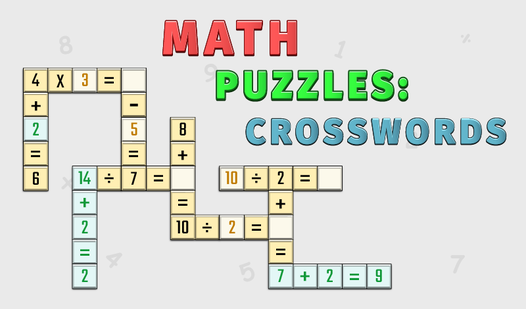
Math Puzzles: Crosswords
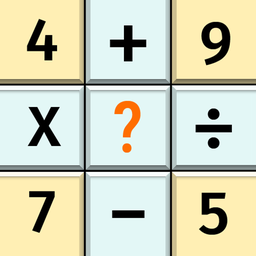
Staring at a blank screen during a coffee break is a recipe for boredom when you could be sharpening your mind instead. Math Puzzles: Crosswords is th...
▶ Play FreeWork the Edges and Corners
Corner sections of a crossword are often the hardest to crack because each letter is connected to fewer crossing answers. If you're stuck, sometimes explicitly moving to a corner and solving inward helps — you limit your variables.
Don't Be Afraid to Skip and Return
If a clue completely stumps you, skip it. Come back after you've filled in crossing answers. There's no prize for solving clues in order.
Word-Based Crossword Games Online
Beyond classic definitions, many online crossword variants push the format in creative directions. Word crosswords challenge you to construct words from given letters, filling the grid using vocabulary knowledge rather than trivia.
Words Crosswords
Language is a vast landscape of hidden patterns that reveals itself the moment you start connecting random characters into meaningful sequences. Words...
▶ Play FreeAnother popular hybrid: math crossword formats that combine arithmetic with the crossword grid structure for a genuinely different kind of challenge.
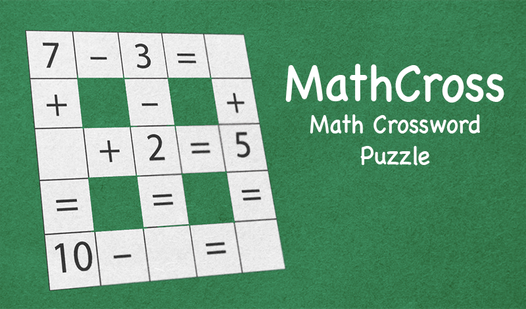
MathCross: Math Crossword Puzzle
Numbers are the universal language of logic, but rarely do they get to play the lead role in a grid-based brain teaser like they do here. MathCross: M...
▶ Play FreeHow to Play Crossword Puzzles: Online vs. Paper
Online Advantages
- Instant feedback — most apps tell you immediately if a letter is wrong
- Keyboard shortcuts — switch between Across/Down with a click or tap
- Auto-check — optional hints and reveals for when you're truly stuck
- Unlimited puzzles — new puzzles daily, massive archives
- No erasing — digital grids reset cleanly
Paper Advantages
- No distractions — no notifications, no temptation to Google
- Tactile satisfaction — there's something about physically filling in letters
- Better for focus — studies suggest paper tasks improve retention
- Portable — no battery required
For beginners, online crosswords are better because the instant feedback loop accelerates learning. You find out immediately when you've gone wrong, before a single mistake cascades into a broken section.
Best Free Crossword Puzzles Online
Here's a curated selection of the best free crossword and word puzzle games you can play right now.
Cryptogram: Words and Codes
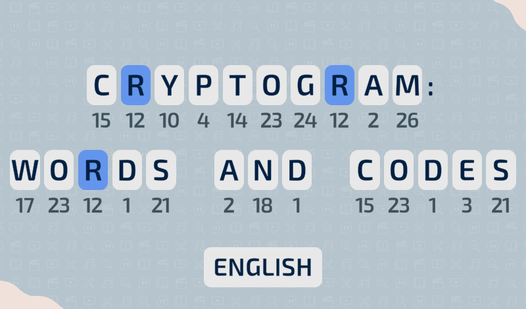
Not a crossword in the traditional sense, but a close cousin. Cryptograms encrypt a famous quote by substituting letters — A becomes X, B becomes Q, and so on. Your job is to decode the message. Shares many cognitive skills with crossword solving: pattern recognition, frequency analysis, and the ability to hold uncertainty across multiple variables.
Cryptogram: Words and Codes
Cracking secret codes is one of the most intellectually satisfying ways to sharpen your focus during a quick break. Cryptogram: Words and Codes turns ...
▶ Play FreeWordle: Guess the Words from 5 Letters
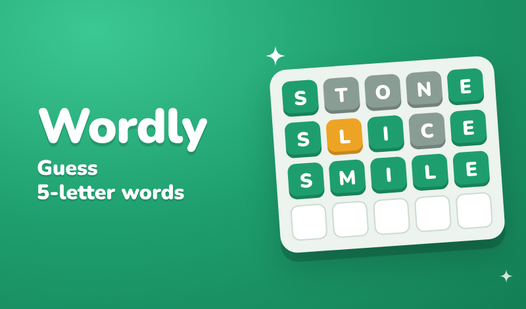
You get six attempts to guess a 5-letter word. After each guess, the game tells you which letters are correct and in the right position, which are correct but in the wrong position, and which aren't in the word at all. This is pure crossword logic distilled into a single word: working with partial information and crossing constraints to zero in on the answer.
Wordle: Guess the words from 5 letters
Crack the code by guessing hidden five-letter terms using your sharp wit and refined vocabulary. You enter a word to test your luck, receiving color-c...
▶ Play FreeYamabusi: Japanese Crosswords
Japanese crosswords (also called nonograms or picross) work completely differently from word crosswords. Each row and column has a number clue indicating how many consecutive squares should be filled. The puzzle resolves into a pixel picture. Zero vocabulary required — this is pure logic. Excellent for developing the systematic thinking that makes word crossword solvers better.
Yamabusi. Japanese Crosswords
Logic puzzle enthusiasts will find endless satisfaction in Yamabusi. Japanese Crosswords as they unravel hidden images through careful deduction. This...
▶ Play FreeExpress Crosswords
Faster-paced crossword format designed for quick sessions. The grids are smaller, the clues are tighter, and the whole puzzle resolves in minutes rather than an hour. Great for commutes or short breaks, and perfect for building solving speed without the commitment of a full Sunday-edition grid.
Express Crosswords
Solving clever clues and filling in grids provides a satisfying mental workout that keeps your brain sharp and engaged. Express Crosswords brings a mo...
▶ Play FreeCollect Words Crossword
A word-collection puzzle where you build words within a crossword-style grid. Combines the spatial thinking of crosswords with the word-building mechanics of Scrabble. Finding a long word that fits multiple constraints simultaneously is genuinely satisfying.
Crossword Online
The most direct option for classic crossword play: a full crossword grid, proper clue lists, timer, and across/down navigation. Clean interface, no unnecessary complexity. This is the format if you want to practice traditional crossword solving with all the standard mechanics.
Common Mistakes Beginners Make
Committing too early. If you're not sure, don't lock yourself in. In digital crosswords, this means don't mentally treat an answer as final until the crossing letters confirm it.
Ignoring the crossing structure. The grid isn't just a collection of independent word slots. Every answer affects its neighbors. Solve relationally, not in isolation.
Taking clues too literally. Crossword clues can be playful. "Ring leader?" might not be about a circus — it could be SATURN (the planet with rings). Setters love misdirection.
Giving up on a section too fast. If one corner looks completely blank, it probably means you haven't cracked the right anchor clues yet. Solve other parts of the grid, return with new crossing letters, and suddenly that blank corner might unlock.
Skipping easy clues. Some solvers save easy clues for later, thinking harder clues deserve first attention. Wrong move. Fill in the easy ones immediately. They generate crossing letters for the hard ones.
Building Your Crossword Vocabulary
Certain words appear in crossword puzzles far more often than their everyday frequency would justify. This is because crossword constructors need words that pack nicely into grid corners and intersect well with common letters.
Some recurring crossword words worth knowing:
- ERNE — a type of eagle (great for vowel-heavy corners)
- OREO — the cookie (four letters, alternating vowels and common consonants)
- ARIA — an opera solo
- ETNA — a type of laboratory lamp (or the volcano)
- ESNE — an Anglo-Saxon serf (yes, really)
- ALOE — the plant
- OLEO — margarine (old-fashioned term, beloved by constructors)
You don't need to memorize these. But the more crosswords you solve, the more you'll start recognizing these recurring patterns. After a hundred puzzles, seeing "Eagle (4)" will immediately suggest ERNE without effort.
How Difficulty Scales
American newspaper crosswords famously scale difficulty across the week. Monday puzzles are the easiest: straightforward clues, simple themes, accessible vocabulary. By Friday and Saturday, the clues are indirect, the themes are complex, and the vocabulary gets obscure. Sunday puzzles are large but typically Thursday-level difficulty.
If you're learning, start with Monday-level puzzles. They teach you the format and build your crossword vocabulary without frustration. As patterns become familiar, move up to Tuesday, then Wednesday. Don't skip the intermediate levels — each step up introduces new clue types and conventions.
Online puzzle archives let you practice this systematically. Many platforms label puzzles by difficulty. Start easy, increase gradually.
Why Crosswords Are Worth Your Time
This isn't about crosswords making you smarter (the research on that is genuinely mixed). The more honest reason: crosswords are one of the few games that get more enjoyable as you get better, not less.
Most games have a skill ceiling where mastery removes challenge. Crosswords don't work that way. Better solvers enjoy harder puzzles, and there's no shortage of harder puzzles. A Monday grid takes a beginner ten minutes and an expert two. An expert-level Saturday puzzle stumps both beginners and many experienced solvers. The ceiling keeps rising.
They're also genuinely relaxing once you're past the initial frustration curve. The focused attention required to parse clues creates a flow state. There's no multitasking in crossword solving — the puzzle occupies exactly as much mental bandwidth as you have.