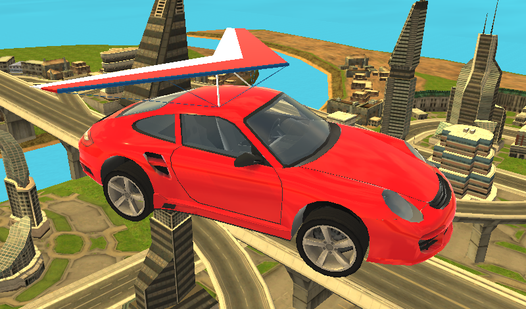
How to Play Crazy Games: Rules, Tips & Free Games
If you've ever searched for как играть в Crazy or wondered what makes this whole category of games so addictive, you've landed in the right place. Crazy games are a genre built entirely around controlled chaos — physics that don't always behave, characters that ragdoll off cliffs in spectacular fashion, and game worlds where the unexpected is the whole point. This guide breaks down the rules, explains the strategies that actually work, and points you toward the best free crazy games you can play right now, directly in your browser.
What Is a Crazy Game?
The word "crazy" in gaming isn't tied to a single genre — it's a design philosophy. A crazy game is any title where unpredictability, exaggerated physics, and over-the-top action are central to the experience. You might be racing downhill with a ragdoll character, smashing opponents as a giant monster, or guiding a marble through an absurd obstacle course. The specific format varies, but the vibe stays consistent: chaotic, fast, and genuinely fun.
Most crazy games share a recognizable set of characteristics. Physics engines that push things past realistic limits — your character doesn't just fall down a hill, they spin, bounce, and tumble in ways that feel almost choreographed in their absurdity. Short session lengths, usually five to fifteen minutes, which means you're never stuck grinding through a long tutorial before the fun starts. Replayability that comes from the randomness itself — the same level plays differently every time because the physics interactions never stack up the same way twice.
There's also an element of accessibility. Crazy games are designed to be picked up immediately. You understand the basic concept within thirty seconds, but discovering the depth underneath that simple surface takes much longer. That gap between "easy to start" and "hard to master" is exactly what keeps players coming back.

Robux Racing 3D! Crazy Ragdoll Downhill!
Fans of physics-based chaos and high-speed thrills will find their next obsession in Robux Racing 3D! Crazy Ragdoll Downhill!. This chaotic arcade exp...
▶ Play FreeHow to Play Crazy: Rules and Core Mechanics
Since crazy games span so many sub-types, there's no single universal rulebook. But there's a framework that applies across the vast majority of titles in this category, and understanding it makes any new crazy game easier to pick up.
Control Schemes
Most crazy games use deliberately simple controls. Keyboard-based games typically rely on arrow keys or WASD for movement, with the spacebar handling jumps, boosts, or special actions. Mouse control usually handles camera rotation or targeting. The simplicity is intentional — these games want you in the action immediately, not reading a tutorial.
Ragdoll physics games are a particularly popular sub-type with their own control logic. In these games, your character's body responds to forces in real time — meaning your character doesn't just move in the direction you push, they react to gravity, momentum, and collisions in semi-realistic ways. Learning to work with this rather than against it is the core skill in ragdoll games.
Objective Types
Crazy games divide into a handful of objective categories, and knowing which one you're playing shapes how you approach strategy:
Racing objectives put you in competition with other players or the clock. The chaos here comes from the environment and from other competitors, and your job is navigating both while staying on course.
Destruction objectives give you a target — break X amount of stuff, cause Y amount of damage — and let you loose in a destructible environment. Strategy here is about maximizing impact, literally.
Survival objectives are about lasting as long as possible. The world will try to destroy you in increasingly creative ways, and your job is to keep adapting.
Score attack objectives layer a multiplier system on top of everything else. Raw survival or destruction isn't enough — you need to do it stylishly, chaining actions together to boost your final number.
Collection objectives send you through chaotic environments to grab items while avoiding obstacles. These often combine elements of racing and survival.
Crazy Kaiju 3D
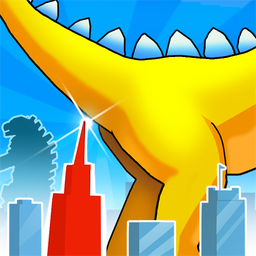
Crushing skyscrapers and stomping through urban landscapes is the ultimate way to unleash your inner titan in Crazy Kaiju 3D. Watching buildings crumb...
▶ Play FreeScoring and Win Conditions
Casual crazy games often have flexible win conditions. You might finish a race, top a leaderboard, or simply beat your own previous run. What makes crazy game scoring interesting is the multiplier systems hiding underneath the surface. Consecutive hits, near-misses, stylish landings, and chained combos all feed into score multipliers that can dramatically change your final result.
Understanding this system is your first real competitive advantage. Two players who survive an identical run can finish with wildly different scores depending on how well they triggered multipliers along the way.
Как играть в Crazy: Strategies and Tips That Actually Work
Getting genuinely good at crazy games isn't about memorizing patterns — it's about reading and responding to chaos. Here are the strategies that apply across almost every game in the category.
Study the Physics Before You Compete
Before you try to win anything, spend the first minute of a new game just experimenting. Push things over, throw your character into obstacles, test the limits of the gravity system. Every crazy game has its own physics logic, and a minute of exploration gives you information that no strategy guide can replicate.
In ragdoll games specifically, understanding how your character tumbles — when they go rigid, when they go limp, how they react to different surfaces — tells you when to fight for control and when to let momentum do the work.

Crazy Downhill! Ragdoll Fall Down!
Navigate your character down treacherous slopes while embracing chaotic physics in Crazy Downhill! Ragdoll Fall Down!. Every descent requires precise ...
▶ Play FreeUse the Environment Offensively and Defensively
Crazy games almost universally feature interactive environments. Explosive barrels, moving platforms, ramps, destructible walls — these aren't just obstacles, they're tools. The player who figures out how to weaponize the environment has an enormous edge over the player who treats everything as something to avoid.
In destruction-derby formats, landing a hit that sends an opponent into an environmental hazard does far more damage than a direct attack. In survival games, using terrain to shield yourself from incoming chaos can be the difference between lasting ten seconds longer and securing a top-five finish.
Stop Fighting the Chaos
This sounds wrong, but it's one of the most reliable pieces of advice for crazy games: when you're mid-ragdoll, mid-crash, or mid-chaos, trying to force control often makes things worse. Experienced players call this "reading the bounce" — anticipating where you'll end up after a collision or fall, so you can position yourself to act effectively once you land, rather than panicking mid-air.
The best players in any crazy game look surprisingly calm. They're not fighting the physics — they're working with them.
SpeedBoy: Crazy Chase at Recess
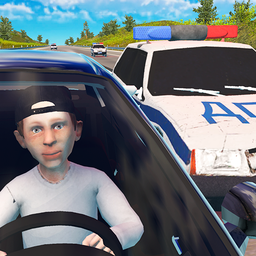
Staring at the clock during a boring study session and wishing for some high-octane excitement to break the monotony is a universal feeling. SpeedBoy:...
▶ Play FreeChain Actions for Multiplier Bonuses
Most crazy games reward you more for consecutive successful actions than for individual moments of brilliance. One massive crash scores okay. Three consecutive crashes with an active multiplier scores dramatically better. Prioritize maintaining streaks over chasing any single high-value moment.
This changes how you approach risk. Sometimes the safer, more consistent path is more valuable than the spectacular risky play, even in a game that looks like it's pure chaos.
Know When to Reset
In games with checkpoints or restart options, there's a real strategic decision between fighting through a bad position and resetting to a better state. Many players reset too early — sometimes a chaotic position recovers into something unexpectedly good. But sitting in an impossible position and grinding through it costs more time than a clean reset would. Learn to read which situations are recoverable and which aren't.
Play With Audio On
Many crazy games include sound cues that telegraph incoming events — an explosion about to happen, a warning tone before a hazard activates, the sound of a competitor approaching from behind. Playing with audio gives you information that purely visual players miss. Even low volume is better than muted.
Best Free Crazy Games Online Right Now
The games below represent the breadth of what the crazy genre has to offer. Each one demonstrates different mechanics and teaches different skills — working through this list will make you a significantly better crazy game player overall.
Robux Racing 3D! Crazy Ragdoll Downhill!
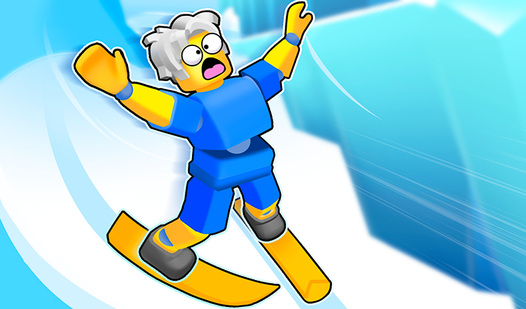
Combines the visual familiarity of the Roblox style with genuinely wild ragdoll downhill racing. You're hurtling down a slope, and the ragdoll physics mean every rock, ramp, and platform sends you flying in unpredictable directions. The challenge is reaching the bottom in one piece — "piece" being loosely defined — while scoring as many points as possible along the way.
This is one of the best introductory titles for understanding ragdoll physics because the feedback loop is immediate and clear. You can see exactly why your character bounced the way they did, which makes each run a learning experience.
Robux Racing 3D! Crazy Ragdoll Downhill!
Fans of physics-based chaos and high-speed thrills will find their next obsession in Robux Racing 3D! Crazy Ragdoll Downhill!. This chaotic arcade exp...
▶ Play FreeCrazy Kaiju 3D
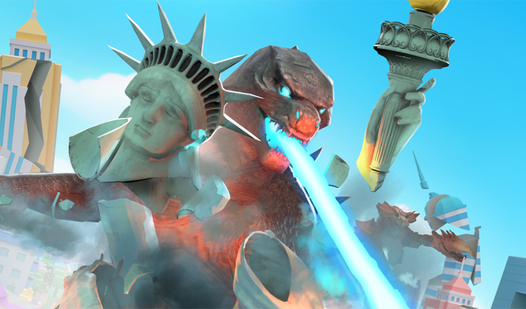
This is a power fantasy executed well. You control a giant monster in 3D space, smashing opponents and structures to grow stronger and larger as you go. The game rewards aggressive, forward-moving play and creative use of the environment — those buildings aren't just scenery, they're weapons.
The competitive angle sets it apart from pure destruction games. You're not just breaking things; you're trying to become the dominant monster on the map, which requires you to manage risk, avoid getting ganged up on, and time your attacks strategically.
Crazy Kaiju 3D
Crushing skyscrapers and stomping through urban landscapes is the ultimate way to unleash your inner titan in Crazy Kaiju 3D. Watching buildings crumb...
▶ Play FreeCrazy Downhill! Ragdoll Fall Down!
Where the Robux Racing title mixes in collection and racing elements, this one focuses specifically on the freefall physics experience. Your character tumbles down progressively more difficult terrain, and success depends on making the right micro-adjustments as you fall.
The physics engine here is particularly satisfying — falls feel weighty, and impacts have real consequence. Perfect for players who want to develop ragdoll reading skills in a lower-pressure environment.
Crazy Downhill! Ragdoll Fall Down!
Navigate your character down treacherous slopes while embracing chaotic physics in Crazy Downhill! Ragdoll Fall Down!. Every descent requires precise ...
▶ Play FreeSpeedBoy: Crazy Chase at Recess
The setting — school recess — gives this game a playful, irreverent tone that works perfectly with its chaos. You're a speedrunning kid in a destruction derby of a school yard, moving fast enough that attempting to control everything is a losing strategy. The game actively teaches the "flow with the chaos" principle, because its pace punishes players who try to micromanage every moment.
Good for building your instincts around speed and reaction time.
SpeedBoy: Crazy Chase at Recess
Staring at the clock during a boring study session and wishing for some high-octane excitement to break the monotony is a universal feeling. SpeedBoy:...
▶ Play FreeObby: Crazy Island
Obby (obstacle course) games are one of the foundational formats in casual gaming, and Crazy Island executes the format with real variety. An open world with multiple mini-games and challenges spread across the island means you're not grinding the same course repeatedly — you move between different types of challenges, each with its own logic and physics quirks.
The tone stays appropriately absurd throughout: expect geometry that makes no architectural sense, hazards that have no clear in-world explanation, and that specific brand of video game logic where the goal is clear even when nothing else is.
Obby: Crazy Island
Navigate treacherous platforms and master tricky jumps in Obby: Crazy Island to become the ultimate parkour pro. You spend your time collecting shiny ...
▶ Play FreeMore Crazy Games Worth Your Time
Crazy Racers is built for players who find standard racing games too predictable. The track design is adversarial — the environment actively works against you — and the physics mean you can't rely on a memorized racing line. Adaptability is the primary skill this game tests.
Crazy Bus Station! takes something mundane (parking a bus) and pushes it past breaking point. The constraints of the vehicle, combined with increasingly chaotic station environments, create a game that's about precision under impossible conditions. Funnier than it sounds, and more replayable.
Crazy Bus Station!
Navigate through crowded parking lots by carefully tapping cars to send them toward their waiting passengers. Crazy Bus Station! transforms simple tra...
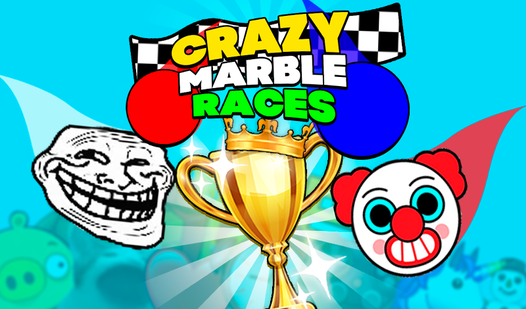
▶ Play FreeCrazy Marble Races! stands out for being the most visually hypnotic entry in this category. Marble racing games have an almost meditative quality — you watch physics play out, influence the race where you can, and accept that outcomes are partly outside your control. The unpredictability here is a feature, not a bug.
Crazy Marble Races!
Marble games have a timeless charm that transforms simple physics into an adrenaline-fueled challenge of speed and precision. Crazy Marble Races! take...
▶ Play FreeCrazy Bricks Destroyer takes the classic brick-breaking format and amplifies every element of it. More bricks, bigger combos, more satisfying cascade effects. If you've played brick-breaker games before, this feels like the version someone made after deciding the original needed to be at least three times louder.
Max Crusher: Crazy Destruction and Car Crashes commits completely to its premise. The crash physics are particularly well-implemented — each collision has weight and consequence, making every impact feel genuinely satisfying. For players who gravitate toward destruction-objective games, this is among the best examples of the format.
Max Crusher: Crazy Destruction and Car Crashes
Staring at a blank screen during a midday slump is the worst, especially when your brain just needs to smash something. Max Crusher: Crazy Destruction...
▶ Play FreeWhy Crazy Games Are Built for Browser Play
The structural advantages of the crazy genre align perfectly with browser-based gaming. Short sessions (five to fifteen minutes) fit naturally into breaks. No download or installation means zero friction between wanting to play and actually playing. Immediate feedback keeps the experience engaging from the first second.
The social loop matters too. Crazy games generate memorable moments — the absurd ragdoll tumble, the improbable chain crash, the impossible survival — that are naturally shareable. Describing them to a friend, or sending a screenshot, is easy and satisfying. That organic word-of-mouth keeps the communities around these games active.
For anyone still asking как играть в Crazy — the most honest answer is to just start. The genre rewards doing over studying. Use this guide to know what to look for, but your real education happens in the first five minutes of any game above. The physics will teach you things no article can.