How to Play Billiards: Rules, Strategies & Free Games
Whether you pick up a cue for the first time or come back after a long break, learning how to play billiards properly makes every session more satisfying. This guide covers everything from basic rules to advanced shot strategies — and points you to the best free billiards games you can play right now, no installation required.
Billiards has been around for centuries, evolving from a lawn game into one of the most refined indoor sports in the world. Today, millions of people play it in clubs, bars, and — increasingly — online. If you want to understand the rules of billiards, sharpen your technique, or just find a good browser game for the evening, keep reading.
What Is Billiards and Why It's Worth Learning
The word "billiards" covers a broad family of cue sports played on a felt-covered table with balls and a cue stick. The most common versions include:
- Pool (8-ball, 9-ball) — the standard bar game in North America and Europe
- Snooker — a longer, more complex British variant played on a larger table
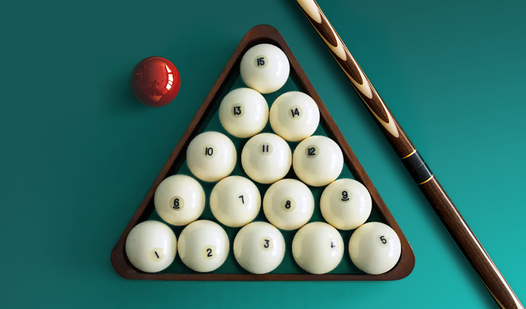
- Russian Pyramid (Русская пирамида) — hugely popular in Russia and Eastern Europe, played with 16 balls on a large table with tight pockets
- Carom billiards — pocketless tables where the goal is to make your cue ball hit other balls
Each variant has its own personality, but the core skill set — controlling the cue ball, reading angles, thinking two or three shots ahead — transfers across all of them. Once you learn how to play billiards in one format, picking up another is much easier.
Basic Rules of Billiards
8-Ball Pool
8-ball is the most widely recognized format for beginners. Here's the essential structure:
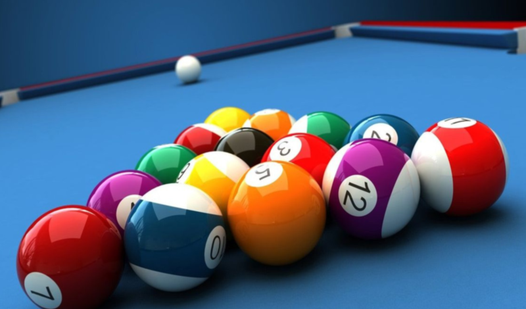
Setup: 15 object balls are racked in a triangle. One player shoots solids (balls 1–7), the other shoots stripes (balls 9–15). The 8-ball sits in the center of the rack.
Break shot: One player breaks the rack by hitting the cue ball into the pack. If at least four balls hit a cushion (or a ball drops), it's a legal break.
Claiming your group: The group (solids or stripes) is assigned on the first ball legally pocketed after the break. Until then, the table is "open."
Winning: Pocket all your balls, then legally pocket the 8-ball in a called pocket.
Fouls: Scratching (cue ball in pocket), failing to hit your ball first, or not driving a ball to a cushion — these all hand ball-in-hand (or ball behind the headstring, depending on house rules) to your opponent.
Russian Pyramid
Russian Pyramid is a rules of billiards variant that rewards patience and precision far more than pool. The table is around 3.6 meters long, pockets are only slightly wider than the balls, and every shot demands serious accuracy.
Key differences from pool:
- All 16 balls are white or off-white, numbered 1–15 plus a separate cue ball
- Pockets are extremely tight — lucky rattles almost never happen
- You must call your ball and pocket on every shot
- First player to 8 points (balls) wins
This format is especially popular in online games — the precision required makes it visually satisfying even to watch.
Billiards 3D: Russian Pyramid
Russian Pyramid is a test of precision and nerves that sets itself apart from standard pool games with its tighter pockets and heavier balls. Billiard...
▶ Play Free9-Ball
Faster and more ruthless than 8-ball, 9-ball is the format most professional tournaments use:
- Balls are played in strict numerical order (1 through 9)
- You only need to hit the lowest-numbered ball on the table with the cue ball
- Any ball can drop legally, including the 9-ball — if the 9 goes in on a legal combination shot, you win immediately
- Fouls give your opponent ball-in-hand anywhere on the table
Billiards Strategies That Actually Work
Knowing the rules is step one. Playing well is a different story. Here are the strategies and tips that separate intermediate players from beginners.
1. Master Cue Ball Control First
New players focus entirely on the target ball. Good players focus on where the cue ball will end up. After every shot, you need a clean angle for the next one. This is called "shape" or "position play."
Practice: set up an easy shot and intentionally roll the cue ball to a specific spot on the table after contact. Do this until rolling to target zones feels natural.
2. Learn the Basic English (Spin)
You can change the cue ball's path after contact by applying spin:
- Top spin (follow): hit the cue ball above center → cue ball rolls forward after impact
- Back spin (draw): hit below center → cue ball stops or pulls back
- Side spin (English): left or right of center → affects the cue ball's path into and off cushions
Start with draw and follow. Side spin adds curve (squirt and swerve) that messes with beginners' aim until they calibrate for it.
3. Think in Clusters
In 8-ball especially, don't just pocket the easiest ball. Look at where your balls are clustered and plan a route through them. Breaking up clusters early — while you have cue ball control — saves you from painting yourself into a corner later.
4. Control the Break
A powerful break matters, but direction matters more. In 8-ball, hit the front ball full-on and follow through while keeping the cue ball near the center of the table. This gives you the most options after the rack opens up.
In Russian Pyramid, the break is even more strategic — many players hit softly to spread the rack without risking a scratch.
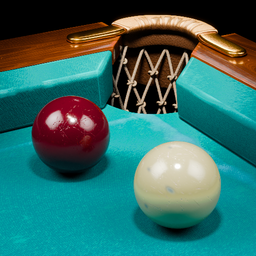
The Best Russian Billiards
Russian billiards is a game of precision and nerve that tests your focus with every single rack. The Best Russian Billiards brings this classic parlor...
▶ Play Free5. Play Defense When Necessary
There's no rule that says you have to pocket a ball every turn. If you have no good shot, play a safety: put your opponent in a tough spot by snookering them or hiding the cue ball behind other balls. Defensive play is a legitimate and often decisive weapon.
6. Develop a Pre-Shot Routine
Professional players repeat the same ritual before every shot: walk around the table, pick the shot, address the cue ball from behind the target line, take a few warm-up strokes, then fire. Consistency in your setup builds muscle memory and reduces nerves.
Common Mistakes Beginners Make
Even players who know the billiards rules well fall into these traps:
Lifting the head: Peeking at the target too early disrupts your stroke. Keep your head still until the cue passes through the contact point.
Gripping too tight: A death grip on the cue kills your follow-through and makes shots unpredictable. The grip should feel like holding a small bird — firm enough that it can't escape, soft enough that you won't hurt it.
Ignoring the bridges: Your bridge hand is half your accuracy system. A sloppy bridge leads to inconsistent tip placement. Practice both closed and open bridges until they're second nature.
Playing every shot with maximum power: Most billiards shots benefit from a smooth, controlled stroke at medium pace. Save the power for the break and specific draw shots.
Russian billiard
Staring at a blank screen during a midday slump is the worst, but a quick round of Russian billiard is the perfect remedy to sharpen your focus. This ...
▶ Play FreeHow to Read Angles (The Physics You Need)
Billiards is a geometry game at its core. Here are the angles that matter most:
The 90-degree rule: When you hit an object ball with stun (no top or back spin on impact), the cue ball deflects roughly 90 degrees from the object ball's path. This is one of the most useful rules in position play.
The 30-degree rule: With a full follow stroke at a half-ball hit, the cue ball deflects about 30 degrees forward. Knowing this lets you predict cue ball position after angled shots.
Cut angle and ghost ball: Imagine a ghost ball sitting where the cue ball needs to be at contact to send the object ball on the right path. Aim the center of the cue ball at the center of that ghost ball.
Cushion angles: Incoming angle equals outgoing angle on clean, center-ball hits. Side spin will alter this — left-hand spin pushes the rebound angle wider, right-hand spin narrows it.
Best Free Billiards Games Online
You don't need a pool table to practice. Modern browser games replicate the physics and feel of real billiards closely enough to build genuine intuition. Here are the best free options on FreeJoy.
Merge Balls 2048: Billiards!
This one breaks the mold entirely. It combines the shooting mechanics of billiards with the number-merging logic of 2048. You shoot numbered balls across a table, merge matching numbers, and chase increasingly high scores. It sounds simple but quickly reveals surprising strategic depth — you need to plan your angles to set up merges, which actually sharpens your spatial reasoning for regular billiards too.
Merge Balls 2048: Billiards!
Staring at the clock and waiting for your lunch break to end can feel like an eternity, but a quick round of Merge Balls 2048: Billiards! turns those ...
▶ Play FreeBilliards 3D: Russian Pyramid
If you want to learn Russian Pyramid from scratch, this is the best place to start. The 3D graphics are sharp, the physics feel honest, and you can adjust computer difficulty from beginner to expert. The tight pockets of Russian Pyramid will force you to be precise in ways that pool simply doesn't require.
(Card already inserted above — see Russian Pyramid section)
The Best Russian Billiards
As the name suggests, this one leans into realism. The 3D rendering is excellent, the classical Russian billiards rules are intact, and the difficulty scales well for players of all levels. It's a good choice if you want to get comfortable with the game's mechanics before stepping up to harder challenges.
(Card already inserted above)
Russian Billiard
A clean, no-frills take on classic Russian billiards. Turn-based gameplay makes it friendly for beginners — you have time to think through each shot without any time pressure. If you're just starting to learn how to play billiards in the Russian Pyramid format, this is one of the most approachable starting points online.
(Card already inserted above)
Cool Domino
Not strictly billiards, but a great companion game for anyone who enjoys the tactical, turn-based nature of cue sports. Classic two-player domino with multiple tile skins and a proper rank system. When you're between billiards sessions, it's a satisfying way to keep your strategic mind active.
Cool Domino
Staring at the clock and waiting for your next meeting to start is a recipe for boredom. Cool Domino provides the perfect mental escape with a competi...
▶ Play FreeMore Great Games to Try
If you enjoy strategy and puzzle games alongside billiards, these titles are worth a session:
Block Puzzle Gem
Ever wondered what makes classic puzzle games so endlessly engaging? Block Puzzle Gem takes that timeless appeal and polishes it to a brilliant shine,...
▶ Play Free
Relax Jigsaw Puzzles
Feeling a little stressed out or just need a satisfying break from your daily grind? Relax Jigsaw Puzzles is here to whisk you away into a world of ca...
▶ Play Free
Skydom - Match 3
Feeling bored and need a quick mental escape? Skydom - Match 3 is here to whisk you away to vibrant sky kingdoms packed with enchanting challenges! Fo...
▶ Play Free
Spider Solitaire (1, 2, and 4 suits)
Arrange descending sequences of the same suit from king to ace to clear the board. Spider Solitaire offers a classic card game experience with multipl...
▶ Play Free
Block Blast 2048
Number merge games have a unique way of keeping your brain sharp while providing that oddly satisfying flow state. Block Blast 2048 takes this classic...
▶ Play Free
Sea Battle Admiral
Staring at the clock during a long afternoon or just craving a quick mental challenge to break up the monotony, you need something that sparks your ta...
▶ Play Free
Cube Blaster 2048
Combine numbered cubes with precision to trigger satisfying chain reactions and rack up massive scores in Cube Blaster 2048. You spend each round stra...
▶ Play FreePracticing Without a Table
A full-size billiards table isn't something most people have at home, but that doesn't mean practice stops. A few ways to build skills without one:
Mini pool tables: These 4–6 foot tabletop versions are inexpensive and let you work on stroke mechanics and basic shot patterns.
Visualization drills: Study diagrams of standard shot patterns (stop shots, draw shots, position play) and mentally rehearse the cue ball path. Mental rehearsal is a recognized technique in sports training.
Online play: Browser games with realistic physics give you repetitions on angles and bank shots. A session of Russian Pyramid online sharpens your cut-angle judgment because the tight pockets punish even small errors.
Watch match footage: Watching professional pool or snooker with focus on cue ball movement (not just object balls going in) trains your eye for shape play faster than most drills.
From Beginner to Intermediate: What Changes
Most beginners can run a few balls in a row. What separates intermediate players is consistency under pressure and position play. Here's what to focus on as you level up:
Extend your runs: Can you pocket 3 balls in a row? Work toward 5. Then 8. Each ball adds complexity because you need shape for the next shot.
Start pocketing on the break: A good break where you pocket a ball and stay in position is a massive advantage. In 8-ball, it essentially gives you first pick of the table.
Add back spin to your arsenal: Once you can reliably stop the cue ball (stun shot) and pull it back (draw), your position play opens up dramatically.
Play with better players: Nothing accelerates improvement like regularly losing to someone who exposes your weaknesses. Watch what they do differently.
Billiards Etiquette Worth Knowing
The rules of billiards extend beyond the table:
- Call your shots in 8-ball and Pyramid even when playing casually — it removes arguments
- Don't celebrate your opponent's scratch — it's bad form
- Stay clear of the table when it's not your turn, and don't stand in your opponent's line of sight
- Acknowledge good shots from your opponent — it's a sport, not a war
- Chalk your tip before every shot — it reduces miscues and keeps the game moving