How to Play Balloon Games: Rules, Tips & Free Fun
If you've ever wondered how to play Balloon games properly — you're in the right place. Balloon games have been a staple of casual gaming for decades, and for good reason: they're easy to pick up, surprisingly deep once you start mastering the mechanics, and endlessly satisfying when a screen full of colorful spheres disappears in a chain reaction. Whether you're after basic rules, smarter strategies, or just a collection of free games to jump into right now, this guide covers everything you need.
What Are Balloon Games?
Balloon games is a broad category covering any title where balloons are the central mechanic. That might mean popping them, collecting them, avoiding them, stacking them, or matching them by color and shape. The common thread is the balloon itself — a simple, universally understood object that game developers have stretched (pun very much intended) into dozens of creative formats.
The genre splits roughly into a few families:
Pop-and-clear games — Classic puzzle format. Balloons fill the screen in patterns, and you must pop them by matching colors, shooting at clusters, or triggering chain reactions. Think Bust-a-Move or Bubble Shooter, but with balloons replacing bubbles.
Survival and avoidance games — You control a character or object that must avoid balloons or destroy them before they cause damage. Timing and spatial awareness matter more here than color matching.
Inflation games — A unique sub-genre where the challenge is inflating a balloon to a target size without popping it. Precision over speed.
Physics-based games — Balloons float, bounce, and collide according to realistic physics rules. Predicting trajectories is half the fun, and the other half is recovering when you predict wrong.
Collect-and-climb games — Gather balloons to gain height, power, or points. Obby-style platformers often use this mechanic to great effect.
Each family has its own rules and optimal strategies, which we'll break down in detail below. Understanding which type you're playing before you start is the quickest shortcut to performing well from the first round.
How to Play Balloon: Core Rules and Basics
The fundamental mechanics vary by sub-genre, but here's what stays consistent across most balloon games.
Controls
Most balloon games are designed for one-handed or mouse-only play:
- Click or Tap — Pop a single balloon or fire a projectile
- Drag — Aim your shot or guide a floating balloon along a path
- Hold — Inflate a balloon (used in inflation sub-genres)
- Arrow keys or WASD — Move a character in platformer-style titles
Mobile versions typically swap mouse clicks for taps, and sometimes add tilt controls for physics-based games where you guide a floating balloon through an obstacle course.
Scoring Systems
Points usually stack based on:
- Cluster size — Popping more balloons simultaneously multiplies your score
- Chains and combos — Triggering secondary pops after your initial shot
- Speed — Some games add time bonuses for fast clears
- Remaining shots — Clearing a level with leftover ammo often rewards significant bonus points
- Inflation accuracy — In precision games, hitting an exact target size scores better than a rough approximation
Losing Conditions
This is where most beginners get caught off guard. Common failure states:
- Balloons reaching the bottom of the screen (most common in pop-and-clear games)
- Running out of shots before clearing the required number of balloons
- A balloon popping before you wanted it to (inflation games)
- Time expiring with too many balloons remaining
Understanding the losing condition first is the single most efficient thing you can do before starting any balloon game. It completely changes how aggressively or carefully you should play, and it's the piece of information that beginners almost never seek out on their first run.
Now, one of the most popular examples of the collect-and-climb format:
In Obby: +1 Balloon Every Second, you automatically gain a balloon every second, and the balloons lift you upward through an obstacle course. The rule is clean — don't hit the obstacles. But the strategy is about timing your movements with the height your balloon stack gives you. Rush ahead and you'll clip a wall. Wait too long and you'll overshoot a platform entirely. It's a perfect example of how a single core mechanic can generate genuinely interesting decisions across every second of play.
How to Play Balloon: Strategies That Actually Work
1. Prioritize Clusters Over Isolated Balloons
In pop-and-clear games, the instinct is to pop whatever balloon is most convenient or closest to your cursor. Resist that instinct hard. Your real goal is to trigger cascades — situations where one well-placed shot removes a supporting balloon and causes a large section of the board to drop or clear automatically. Look for "keystone" balloons: the ones holding up large clusters. Removing them often clears 10-20 balloons with a single shot, which is dramatically more efficient than picking off lone targets.
2. Work From the Top Down
When balloons hang from a ceiling or a fixed top edge, shots that hit the top row often cause everything below to fall free. This is significantly more efficient than trying to clear row by row from the bottom. Top-down play also scales better in later levels when the board gets crowded and individual shots become scarce.
3. Use the Walls
Most pop-and-clear games use a walled arena. Shots bounce off the side walls at predictable angles, meaning you can hit balloons that seem completely unreachable via a direct shot. Experienced players spend as much time planning bank shots as direct shots. Practice your angle estimation deliberately in early, low-stakes levels — it's a skill that genuinely compounds over time and separates average players from strong ones.
4. Don't Pop What You Don't Have To
In games with limited shots, popping every balloon you see is a trap. Focus strictly on what's needed to meet the level objective. If you need to clear 30 red balloons, leave blue and green ones entirely alone. Wasted shots on irrelevant targets are the primary reason players run out of ammo in later levels, and it's a mistake that feels obvious in hindsight but happens constantly in practice.
Thorn vs Balloons puts you in a defensive role, protecting a structure from waves of incoming balloons. The strategy here flips from most balloon games: instead of targeting the biggest clusters for maximum points, you're prioritizing threats based on proximity and trajectory. A small balloon that's almost at your base is a higher priority than a large group that's still far away. This demands triage thinking rather than maximum-damage thinking, which is a significant mental shift if you're coming from offense-oriented balloon games.
5. Inflation Games: Slow Wins Every Time
For inflation sub-genres, the most common mistake is filling too fast. The instinct is to hold the inflate button until you hear warning signs, then back off — but this approach puts you right at the edge of popping with zero margin. The correct technique is to add pressure in short bursts, watching the balloon's visual and audio cues between each burst. Most inflation games have a sweet spot: a size that scores maximum points without meaningful pop risk. Find that zone through careful observation, then operate comfortably inside it instead of pushing to the absolute limit.
6. Physics Games: Predict, Don't React
In physics-based balloon games, reacting to what you currently see puts you permanently behind. Watch a balloon's trajectory for a full second or two before acting. Identify the drift pattern (most games maintain consistent physics across rounds). Then make preemptive interceptions rather than scrambling to catch up with where the balloon already is. Players who master the physics model early outperform reactive players even when the reactive players have faster reflexes.
Balloons Pyramids
Aim and fire at vibrant balloons arranged in a towering pyramid to clear the screen and rack up high scores. Matching three or more balloons of the sa...
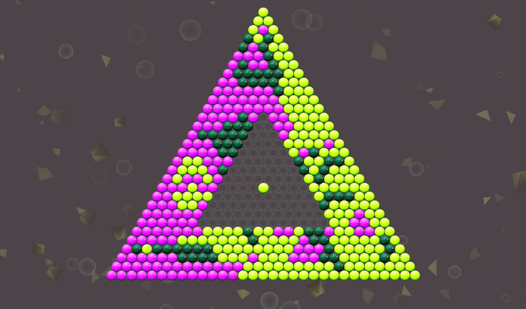
▶ Play FreeBalloons Pyramids is a clean showcase of structural thinking. Balloons are arranged in pyramid formations and you must pop them in the right sequence to cause pyramid collapses. Start popping from the base and you'll chip away forever at a structure that keeps supporting itself. Start from the apex and let gravity do most of the clearing for you. Understanding structural weak points — where one removal causes the most downstream collapses — is the core skill that makes the difference between grinding a level and breezing through it.
Best Free Balloon Games to Play Right Now
Precision and Inflation
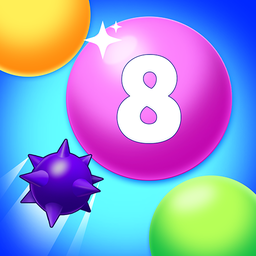
Balloons: Inflate and DO NOT pop!
Mastering the physics of expansion is the ultimate challenge in modern casual gaming. Balloons: Inflate and DO NOT pop! turns a simple concept into a ...
▶ Play FreeBalloons: Inflate and DO NOT pop! is one of the purest tests of fine-motor precision in the entire genre. You inflate a balloon by clicking or holding, and your goal is to reach the maximum possible size without bursting it. The feedback is deliberately subtle — a slight sound change, a minor color shift near the threshold — and the window between maximum size and explosion is intentionally narrow. It rewards patience and attention to small sensory cues rather than speed. Once you learn to read those signals reliably, your scores jump in a single session.
Strategic Aiming
Balloons Rhombics changes the spatial rules entirely. Instead of a standard rectangular grid or circular arena, balloons float on a diamond-shaped field. Your standard top-down strategy doesn't apply cleanly here — you need to think diagonally and recalculate your bank-shot angles from scratch. The game rewards players who can quickly rebuild their spatial reasoning in a rotated frame. If you've mastered rectangular grid games and want a challenge that actually feels fresh, Rhombics is the natural next step.
Classic Pop Mechanics
Bubble: Pop Balloons brings the classic bubble shooter format with balloon-flavored visuals and genuinely fast-paced action. Matches trigger satisfying audio-visual feedback, chains feel impactful, and the difficulty curve is well-calibrated. This is the game to go to when you want the most "classic" balloon experience available online — familiar enough to feel comfortable immediately, deep enough to keep you improving for hours.
Merging and Matching

Merge 3D - Match 3 Balloons!
Casual puzzle enthusiasts who enjoy strategic thinking will find endless satisfaction in helping our lucky grandpa reach the ground safely. Merge 3D -...
▶ Play FreeMerge 3D - Match 3 Balloons! is a hybrid that combines match-3 puzzle mechanics with 3D merging. Same-value balloons combine into a higher-tier balloon when matched, creating a progression loop where your board evolves as you play. This is slower and more cerebral than pure pop games — a natural fit for players who enjoy planning several moves ahead rather than reacting to immediate threats. The 3D perspective also adds a satisfying visual depth that flat match-3 games lack.
Sorting and Organization
Sort Fruits: Balloons blends sorting puzzles with the balloon theme. You're sorting fruit-decorated balloons into the correct containers, and the challenge scales as more fruit types and container configurations get added per level. It appeals strongly to players who like orderly thinking and enjoy the satisfying "click into place" moment when a complex sort resolves perfectly. The fruit-balloon combination sounds silly on paper but works extremely well as a visual system for tracking categories under pressure.
Physics Chaos
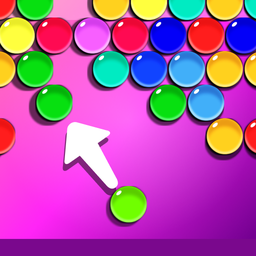
Boops: Pop balloons
Aim and launch colorful balloons to clear the board in this vibrant match3 puzzle experience. You must strategically group three or more bubbles of th...
▶ Play FreeBoops: Pop Balloons offers a more unpredictable, physics-driven experience. Balloons float around a space and you pop them by flicking objects, shooting projectiles, or triggering collisions. The unpredictability is deliberate — each round plays out differently because the physics introduce meaningful randomness. If you prefer variety and adaptation over optimal, repeatable strategy, Boops delivers a style of play that stays fresh across many sessions.
Relaxed and Casual
Balloons around! wraps the balloon concept in a deliberately calm, unhurried format. Balloons drift gently around a space and you pop them at your own pace, with no time limit or meaningful losing condition. It's genuinely soothing — a palate cleanser between more intense games, or the right starting point for younger players who are new to balloon games and want to get comfortable with the controls before pressure enters the picture.
Tips for Getting Better Faster
Warm up with easy levels. Most balloon games have opening levels that are nearly impossible to lose. Use them to map the control scheme, understand the physics, and identify which color-matching or aiming mechanics apply. Tutorials often reveal non-obvious mechanics like wall bouncing rules or power-up timing windows that aren't explained elsewhere.
Change one thing at a time. If you fail a level repeatedly, isolate one specific mistake — aim angle, shot timing, balloon priority order — and correct only that. Changing your entire approach at once makes it impossible to identify what actually helped, and you'll re-introduce old mistakes alongside new ones.
Watch the score, not just the clear condition. Even when your goal is survival, score tells you how efficiently you're playing. Low scores on easy levels usually indicate you're wasting shots or missing chain opportunities that will become mandatory in harder stages.
Take short breaks between failed attempts. Balloon games punish rapid-fire frustrated decisions. If you fail a level twice in a row, step away for 30 seconds. You'll often spot an obvious angle or strategy immediately on the next attempt that was invisible during the frustration of the previous two.
Practice bank shots deliberately. Most players develop wall-bounce skills accidentally through trial and error. Deliberately trying bank shots during low-stakes early levels builds the mental geometry much faster than waiting to stumble into it.
Study the loss condition before your first real attempt. Spend your first run in any new balloon game figuring out exactly what causes a loss, not maximizing score. That single piece of information changes every decision you make in every subsequent run.
Common Mistakes Beginners Make
Shooting the nearest balloon. This almost never produces the best outcome. Teach yourself to scan the full board before firing, not just the most obvious or visually prominent target.
Ignoring color distribution. In pop-and-clear games, burning through the wrong color early and running short later is extremely common. Keep a rough mental count of which colors have large, accessible clusters worth targeting soon.
Holding too long in inflation games. The instinct is to inflate until you hear the danger cue, then back off — but this puts you at maximum risk every single time. Add pressure in short bursts with deliberate pauses instead.
Playing physics games reactively. Balloons drifting slowly seem less urgent, but they're often harder to intercept once they build momentum or reach a corner where angles get awkward. Intercept early, not late.
Quitting before understanding the loss condition. The first few runs in any new balloon game should prioritize understanding exactly what triggers a game-over, not score optimization. That clarity transforms how you approach every subsequent run.