How to Play Ball: Rules, Strategies & Free Games
Ball games have been part of human culture for thousands of years — from ancient rubber spheres used in Mesoamerican rituals to the packed stadiums of modern football. Learning how to play Ball in its many online forms is surprisingly accessible, and the variety you can get from ball-based games is genuinely staggering. Physics puzzles, sports simulations, rhythm challenges, merge mechanics — the category covers an enormous range of experiences, all anchored by that one fundamental object rolling, bouncing, or flying through the screen.
In this guide, we'll break down the rules, share strategies that actually work, and point you toward the best free Ball games you can play right now — no registration, no downloads, just instant fun.
What Is Ball: One Word, a Whole Universe
"Ball" as a game category isn't a single genre. It's an umbrella covering dozens of distinct gameplay styles. The unifying thread is simple: a ball (or multiple balls) sits at the center of the mechanic. What happens around that ball changes everything.
The main subgenres you'll encounter:
- Physics-based puzzlers — gravity, momentum, and bounce define whether you win or lose
- Sports simulations — football, soccer, basketball translated into browser-friendly formats
- Merge and number puzzle games — combining matching balls to create new, higher-value ones
- Rhythm and music games — balls bouncing in sync with songs, rewarding timing and feel
- Coloring and casual games — relaxed, creative, perfect for younger players or unwinding
Each type has its own internal logic, but they all reward the same underlying skill: understanding how the ball moves and making smart decisions about where it should go next.
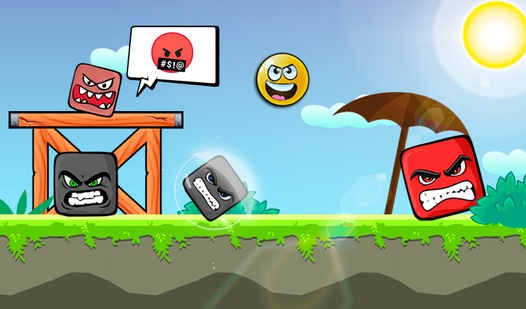
A great place to start exploring the adventure side of ball games is Yellow Ball 4 — a colorful puzzle game where you guide a cheerful sphere through increasingly inventive levels, picking up the rules organically as new mechanics layer in.

Yellow Ball 4
Navigate your bouncy hero through vibrant landscapes and dodge tricky obstacles in Yellow Ball 4. You will roll, jump, and weave past square enemies w...
▶ Play FreeRules and Basics of How to Play Ball Games Online
The mechanics vary by subgenre, but a handful of principles appear consistently across almost every ball-based browser game.
Physics Ball Games
Physics games follow simplified but consistent Newtonian rules:
- Launch direction and power — aim with the mouse or your finger, then fire
- Gravity — the ball always falls unless something supports or propels it
- Collision behavior — walls, platforms, and obstacles affect trajectory in predictable ways
- Objective — reach a target zone, knock out specific elements, or collect items without hitting hazards
The challenge is reading the environment and predicting behavior before you act. Each level introduces a new variable — a moving platform, a teleporter, a bouncy surface — and asks you to apply the underlying physics rules to solve it. Experienced players always study the level layout before their first attempt, identifying obstacles and thinking through trajectory options before committing to a shot.
Merge and Puzzle Ball Games
Merge ball games follow a distinct and addictive structure:
- Balls arrive continuously (usually from above or from a launcher)
- Matching balls combine on contact, creating a new, upgraded ball
- The goal is either to reach a target value or to clear the board before it fills up
- Difficulty increases through faster ball arrival, tighter spaces, and higher target values
The strategic depth comes from thinking several moves ahead rather than just reacting to what's on screen. Where you place each ball determines what combinations are available next — and skilled players engineer cascading merges rather than just clearing one pair at a time.
For younger players or anyone wanting a gentler introduction to ball-based interaction, Color The Red Ball offers a creative alternative: a coloring game featuring various ball-themed pictures you can fill with colors and effects, focused entirely on creativity rather than competition.

Color The Red Ball
Creative minds will adore Color The Red Ball because it turns a simple coloring book experience into a delightful digital adventure. Players select th...
▶ Play FreeSports Ball Games
Sports-based titles follow their real-world counterparts more closely than most browser games:
- Timing — kick, throw, or pass at precisely the right moment
- Positioning — anticipate where defenders will be and react ahead of the play
- Power calibration — too hard and you overshoot, too soft and you get intercepted
- Score-based victory — accumulate more goals, touchdowns, or baskets than the opponent
Controls are typically simplified for browser play, but the strategic thinking maps directly from the real sport. Understanding how your opponent or AI moves, creating space, and choosing the right moment to commit — these carry over perfectly.
Rhythm Ball Games
Rhythm games built around balls are beginner-friendly on the surface but surprisingly deep once you push for high scores:
- The ball moves through the level automatically to a music track
- Your inputs — jumps, direction changes, taps — must align with the beat
- Mistimed inputs cost lives or reset progress
- Perfect timing chains unlock multipliers and bonus scores
The key insight: these games punish pure reaction. You need to feel the rhythm in advance, not watch for visual cues and respond. That shift in approach — from reactive to anticipatory — is what separates average scores from great ones.
Strategies and Tips: How to Play Ball Like a Pro
Understanding the rules is one thing. Getting genuinely good requires a different level of attention. Here's what actually works.
1. Study Before You Shoot
In physics puzzle games, most levels show you a ghost trajectory before you commit. Don't skip this step — spend real time adjusting angle and power until the projected path looks exactly right. Rushing launches is the number-one reason players get stuck. The few extra seconds of aiming pay for themselves immediately.
2. Think in Chains, Not Individual Moves
Merge games punish reactive players. Every ball you place changes what combinations become available next. Before dropping a ball, ask: where will the resulting merge push things? Can I set up a cascade — one merge triggering another — with this placement? Players who think one move ahead plateau quickly; players who think three or four ahead consistently post high scores.
The 3D evolution of the merge concept is brilliantly realized in 3D Balls: Merge, where you connect balls in three-dimensional space to transform them into new spheres. The depth axis adds a whole new layer of planning compared to flat merge games.

3D Balls: Merge
Merging shapes is the ultimate casual stress-buster that keeps your brain sharp while your hands stay busy. 3D Balls: Merge takes this satisfying mech...
▶ Play Free3. Use Walls Aggressively in Physics Games
Browser physics games almost always support bank shots — bouncing off walls to reach angles that seem impossible with a direct line. The geometry is basically billiards: the angle of approach equals the angle of reflection. Once that spatial logic becomes second nature, levels that looked unsolvable start opening up. Practice deliberately angling shots off walls even when a direct shot is available — it builds the skill faster.
4. Exploit Defensive Patterns in Sports Games
AI defenders in sports ball games follow recognizable patterns, especially at standard difficulty. Watch the first two or three plays carefully rather than rushing into each one. Once you identify how the AI positions and moves, you'll find consistent gaps to exploit. Most sports browser games have at least one positional weakness that works repeatedly until the AI adapts — find it and use it while it lasts.
If your interest in sports ball games extends to football knowledge, Guess the Football Player by Their Career! tests your real-world knowledge directly — identify players from career stats, transfers, and achievements in a fast-paced quiz format.

Guess the football player by their career!
True fans of the sport who live and breathe every match will find their ultimate challenge in Guess the football player by their career. This engaging...
▶ Play Free5. Stop Watching the Screen in Rhythm Games
This sounds counterintuitive, but in rhythm ball games, locking onto visual indicators makes you consistently late. Visual processing adds reaction delay. Instead, internalize the music and let your fingers move to the beat naturally, slightly ahead of the visual cues. Start with tracks you already know well — songs where you can anticipate the beat rather than react to it. Your accuracy will improve measurably once muscle memory replaces conscious reaction.
Headphones matter here more than most players expect. Playing with good audio versus laptop speakers produces a measurable difference in timing accuracy, particularly in faster tracks.
Jump to the Rhythm of Songs! Musical Ball! takes this challenge seriously — your ball must bounce in perfect sync with real songs, and the gap between a reactive player and a rhythmic one is enormous. Chase those high scores and you'll genuinely develop musical timing.

Jump to the Rhythm of Songs! Musical Ball!
Control a bouncing sphere that syncs perfectly with the beat of the latest tracks to master every level. Jump to the Rhythm of Songs! Musical Ball! de...
▶ Play Free6. Preserve Space in Merge Games
The single biggest mistake in merge ball games is filling the board without a plan. Always maintain at least one clear lane or open area for maneuvering. When the board gets too full, your decision space collapses — you're forced to make reactive placements instead of strategic ones, and the game degrades into damage control. Clear from the top down systematically, and resist the temptation to fill corners with "temporary" placements you're planning to clear later. They rarely get cleared.
7. Replay Earlier Levels
Getting stuck on a hard level and grinding it endlessly is the slow path. Replaying earlier, easier levels isn't wasted time — it sharpens your feel for the physics or merge mechanics, and often surfaces rules and techniques you missed the first time through. Competence compounds: mastery on familiar ground transfers directly to tougher challenges.
Best Free Ball Games on FreeJoy
Here's a detailed breakdown of the top ball games available for free — click any of these and you're playing in under ten seconds.
Touchdown - American Football Rugby
An energetic sports ball title that captures the intensity of American football in a tight, accessible browser format. You control a ball carrier, reading the defense and finding gaps to sprint through. The physics on tackles and dodges feel punchy and satisfying, and the AI provides genuine resistance without crossing into unfair territory. Perfect for five-minute sessions during breaks.

Touchdown - American Football Rugby
Stuck in a boring meeting or just need a quick adrenaline boost to clear your head? Touchdown - American Football Rugby is the ultimate digital escape...
▶ Play FreeBall Sort Puzzle: Color Tubes
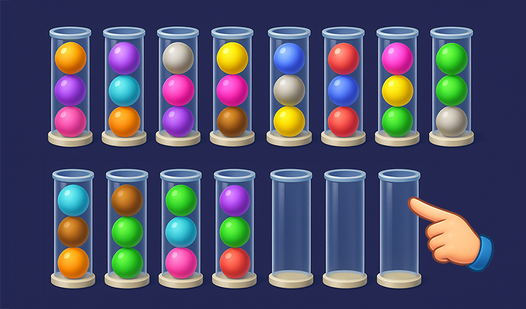
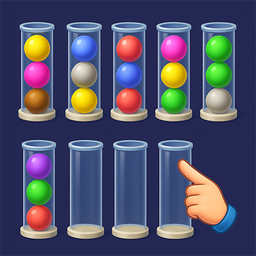
A deceptively tricky puzzle game with a clean premise: sort colored balls into tubes so each tube holds only one color. The first handful of levels ease you in, but complexity escalates sharply — you'll need to plan four or five moves ahead, keep track of which tubes are "committed" versus still flexible, and resist the impulse to rush. One of the most addictive games in the ball puzzle category, with a depth that's easy to underestimate.
Ball Sort Puzzle: Color Tubes
Sorting colorful spheres into matching tubes requires sharp logic and a steady hand in Ball Sort Puzzle: Color Tubes. You tap to lift the top sphere a...
▶ Play FreeMerge: Glass Balls!
A visually premium take on the merge mechanic. The glass balls look like actual glass — light refracts through them, collisions trigger satisfying sounds, and cascading merges produce genuinely beautiful visual effects. The game is relaxing enough for extended play sessions while still engaging your planning brain. If you want something meditative that doesn't ask you to turn your mind off, this one delivers.

Merge: Glass Balls!
Falling physics puzzles have a unique way of turning a quick break into an intense challenge for your reflexes. Merge: Glass Balls! takes this concept...
▶ Play Free2048 3D Balls
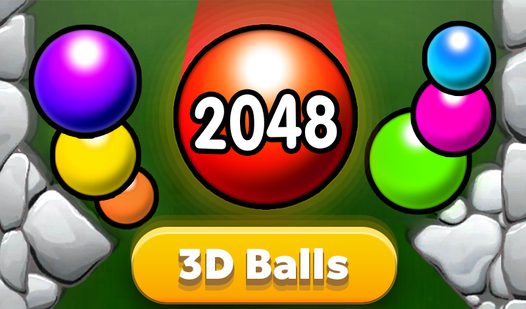
A spatial evolution of the classic 2048 number puzzle. Instead of sliding tiles on a flat grid, you're working with rolling numbered balls in a three-dimensional space. Depth perception becomes a genuine strategic factor — you need to think about where balls sit relative to each other across all three axes, not just horizontally. If flat 2048 has become routine for you, this version restores genuine challenge.

2048 3D Balls
Staring at the clock waiting for a meeting to end or just need a quick mental escape from a monotonous afternoon? 2048 3D Balls is the ultimate time k...
▶ Play FreeShooting Balls: Connect in a Plate 3D
This title blends shooting mechanics with color-matching puzzles on a three-dimensional plate. You fire balls toward the plate, trying to form groups of three or more matching colors to clear them. The 3D perspective adds real complexity that flat versions of this genre can't match — you're reading depth, angle, and color simultaneously under time pressure. Landing multi-ball clears is deeply satisfying once you develop an eye for the angles.

Shooting balls: Connect in a plate 3D
Fans of simple games will find endless enjoyment in the high-stakes precision required by Shooting balls: Connect in a plate 3D. Your primary goal inv...
▶ Play FreeHow to Play Ball Games: Advanced Thinking
Beyond the basics and beginner strategies, there are patterns that separate intermediate players from experienced ones.
In merge games, the progression follows three distinct phases. Early: survive, keep the board manageable, don't let it fill. Middle: start engineering chains, placing balls to enable multiple consecutive merges. Late: play the entire board as a system — know which combinations are available, which spaces are load-bearing, and when to trigger your planned cascade sequences. Players who reach the late phase of thinking reliably produce scores that look impossible to newer players.
In physics ball games, the skill ceiling is determined by how accurately you can visualize trajectories in three dimensions, even when the game presents in 2D. The best technique: before aiming, close your eyes and mentally trace the exact path the ball needs to travel — every bounce, every collision. Then open your eyes and match your aim to that mental picture. This breaks the reactive "point and click" habit and forces genuine engagement with the physics.
In sports ball games, the greatest leap in performance comes from learning to fake. Almost every sports ball game has some kind of deception mechanic — a quick direction change, a pump fake, a shoulder drop. AI defenders in browser games respond to movement direction predictably. A brief fake in one direction before cutting the other way consistently opens clean shooting or passing lanes. Once you start using fakes deliberately, sports ball games become significantly easier across the board.
In rhythm ball games, the progression from beginner to advanced is entirely about building anticipatory feel. The fastest method: tap to the beat of familiar music before opening the game. Songs you know so well you could hum every note are perfect material. Your hands will start moving slightly ahead of the beat rather than reacting to it — and that slight anticipation is exactly the timing edge rhythm games reward.
Why Ball Games Stay Popular Year After Year
Ball games have dominated casual and competitive gaming alike for a reason that goes deeper than trend cycles: a ball is one of the most natural interactive objects that exists. Round, responsive to physics, with a movement path that human brains are evolutionarily wired to track and predict — we evolved to throw things, catch things, and judge trajectories with precision. Ball games plug directly into that ancient cognitive hardware in a way that very few other mechanics do.
Online ball games make this appeal accessible anywhere, on any device, in any time slot. FreeJoy hosts hundreds of ball-based games spanning every subgenre, skill level, and mood — whether you have three minutes or three hours, there's a ball game calibrated for exactly that window.