How to Play Babysitting Games: Rules & Tips
So you want to know how to play babysitting games — great choice. Whether you've stumbled across this genre for the first time or you're a dedicated fan of virtual caretaking sims, babysitting games are one of the most varied and genuinely fun categories in casual gaming. From feeding hungry toddlers to calming crying babies, from grooming adorable pets to juggling multiple tiny disasters at once — these games test your patience, multitasking, and quick thinking in the best possible way. This guide covers everything: rules, strategies, the best free titles to play right now, and some hidden gems that deserve way more attention.
What Are Babysitting Games?
Babysitting games are a subgenre of simulation and casual games where you take on the role of a caretaker. Your job is to keep one or more characters — babies, toddlers, virtual pets, or quirky creatures — happy, healthy, and entertained. The genre spans everything from realistic infant-care simulations to completely absurd fantasy scenarios involving mutant pets and musical monsters.
What makes how to play babysitting games different from other sim genres is the constant pressure. Unlike a city builder where you can pause and think, babysitting games demand your attention right now. A baby that's been crying for three seconds is already a small crisis. A pet whose hunger bar hit zero while you were styling its hair? Catastrophe.
The appeal is real: these games scratch the same itch as time-management games but with an emotional hook. You're not just clicking through tasks — you're building a tiny bond with a digital creature that needs you. That's surprisingly compelling.
The Core Loop
Every babysitting game, regardless of theme, runs on the same basic loop:
- Monitor needs — hunger, hygiene, happiness, energy, health
- Respond fast — the needs deplete over time or spike suddenly
- Complete tasks — feeding, bathing, playing, putting to sleep
- Earn rewards — coins, unlocks, new items, new levels
- Progress — harder levels, more characters, bigger challenges
Master this loop and you've got babysitting games figured out at the mechanical level. Everything else is execution and game-specific tricks.
Rules and Basics of How to Play Babysitting Games
Understanding the rules is step one. Most babysitting games don't spell everything out — you're expected to figure things out through play. Here's what the games rarely tell you upfront.
Need Bars Are Priority Queues
Most games display several need bars: hunger, cleanliness, happiness, sleep, health. The mistake beginners make is treating all bars as equal. They're not. Usually the hierarchy is:
- Health — if this hits zero, it's game over or a big penalty
- Hunger — depletes fastest, causes mood crashes
- Cleanliness — affects happiness indirectly
- Sleep — if ignored too long, causes all other bars to drop faster
- Happiness — a multiplier for your score, not a survival stat
Learn to read which bar is in red right now and handle that first. Don't interrupt feeding to do a bath. Finish what you're doing, then pivot.
The Clock Is Your Actual Enemy
In time-limited babysitting games, the clock isn't just a score multiplier — it changes what strategies work. Early in a level, you can afford to be thorough. Mid-level, you need to triage. In the final stretch, you're doing damage control. Recognizing which phase you're in stops you from spending 20 seconds on a bath when the baby is three seconds from a hunger meltdown.
Upgrades Change the Rules
Almost every babysitting game has an upgrade system. This is where most players leave massive amounts of performance on the table. The three upgrades worth prioritizing in almost any game:
- Speed upgrades — you move faster, complete actions faster
- Capacity upgrades — carry more items, hold more food
- Recovery upgrades — needs deplete slower, giving you more reaction time
Don't spread upgrades evenly. In the early game, stack speed. It compounds into everything else.
My Talking Labubu: Original Secret Toy for Kids
Fans of virtual pet games who enjoy dressing up characters and collecting cute surprises will fall in love with My Talking Labubu: Original Secret Toy...
▶ Play FreeStrategies and Tips That Actually Work
Once you've got the basics down, these strategies separate good players from great ones.
Strategy 1: Never Let a Bar Go Empty
This sounds obvious, but the real insight is how far ahead to think. Don't feed the baby when hunger hits red — feed when it hits yellow. Don't wait for the pet to be miserable to play with it. Proactive care takes less total time than reactive care, because crisis states often trigger cascading problems. A hungry pet becomes unhappy, an unhappy pet might refuse certain interactions, and now you've lost twice the time.
Strategy 2: Group Similar Tasks
If you have multiple characters to care for, try to batch similar actions. Feeding all the hungry ones in sequence is faster than feeding one, bathing one, playing with one, then coming back to feed the next. Task switching has a hidden cost — animations, movement, loading actions. Minimize it.
Strategy 3: Learn the Spawn Patterns
In level-based babysitting games, needs don't appear randomly — they follow patterns tied to the level design. After 2-3 runs of the same level, you'll start to predict when the crying spike hits, when everyone needs food at once, when there's a brief lull. Use the lull to prep: pre-cook food, stock items, set up for the next wave. Players who memorize patterns score dramatically higher than those reacting from scratch each time.
Strategy 4: Happiness Is a Score Booster, Not Survival
Don't sacrifice efficiency chasing maximum happiness bars. Keeping all bars at 80% and moving fast beats keeping one bar at 100% while others crash. The exception: some games give happiness bonuses that multiply your coin earnings. In those cases, a short detour to maximize happiness early can pay off big later.

My Sprunki Incredibox Pet: Create Your Own Morph!
Customize your unique creature in My Sprunki Incredibox Pet: Create Your Own Morph and watch it come to life with hilarious animations. You will spend...
▶ Play FreeStrategy 5: Restart Early, Not Late
If a level is going badly and you're 30 seconds in, restart. Don't grind through a doomed run. Your time is worth more than the coins from a failed level. This is a mindset shift — accepting the restart as a tool rather than a failure. The players who progress fastest restart without ego.
Best Free Babysitting Games to Play Right Now
Theory is great, but nothing beats actually playing. Here are the top picks available free on FreeJoy — each with a quick breakdown of what makes it special and how the babysitting mechanics show up.
My Talking Labubu: Original Secret Toy for Kids
Labubu is a mysterious little creature that needs constant attention, and the game nails the core babysitting loop. You feed it, dress it up, play mini-games to keep it entertained, and watch its mood fluctuate based on how well you're doing. The "talking" mechanic means it actually responds to your care — neglect it and it gets grumpy in ways that feel weirdly personal. Great for players who want a babysitting game with personality.
My Talking Labubu: Original Secret Toy for Kids
Fans of virtual pet games who enjoy dressing up characters and collecting cute surprises will fall in love with My Talking Labubu: Original Secret Toy...
▶ Play FreeMy Sprunki Incredibox Pet: Create Your Own Morph
This one's a creative twist on pet care. The Sprunki creature isn't just a passive need-bar machine — it responds to music and sound, which adds a layer of interactivity you don't see in most babysitting games. Keeping your Sprunki happy involves musical interaction as much as feeding and grooming. If you like your caretaking with a side of creative expression, this is the pick.
My Sprunki Incredibox Pet: Create Your Own Morph!
Customize your unique creature in My Sprunki Incredibox Pet: Create Your Own Morph and watch it come to life with hilarious animations. You will spend...
▶ Play FreePig Pigotchi — Grow a Pig! My Pet
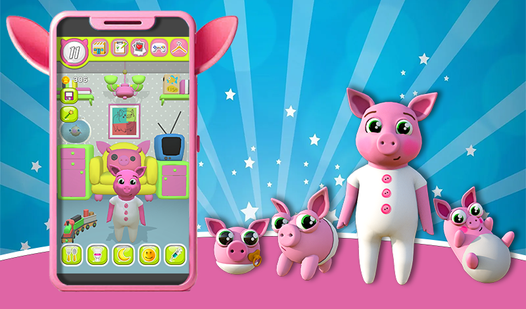
Tamagotchi-style games have a special place in the babysitting genre, and Pig Pigotchi delivers that classic virtual pet energy. You raise a pig from tiny squealing baby to full-grown character, managing its food, health, and happiness across multiple stages. The progression system is satisfying — watching your pig evolve based on how well you've cared for it creates a genuine sense of investment. Miss too many care sessions and your pig grows up… let's say less impressively.

Pig Pigotchi. Grow a pig! My pet
Fans of virtual pet simulators will adore the charming experience of Pig Pigotchi. Grow a pig! My pet as they nurture their own adorable digital compa...
▶ Play FreeMy Talking Italian Brainrot: Virtual Pet for Kids
Italian Brainrot culture meets virtual pet mechanics in this wonderfully weird game. Your pet speaks in chaotic Italian Brainrot phrases, reacts dramatically to neglect, and has a personality that's genuinely funny. The babysitting elements are all there — hunger, hygiene, entertainment, sleep — but wrapped in enough absurdist humor that it never feels like a chore. Highly recommended if you want your caretaking experience to be slightly unhinged.

My Talking Italian Brainrot: Virtual Pet for Kids
Staring at a blank screen during a midday slump is the worst, but My Talking Italian Brainrot: Virtual Pet for Kids is the perfect remedy to shake off...
▶ Play FreeHelp the Kitten — Pets
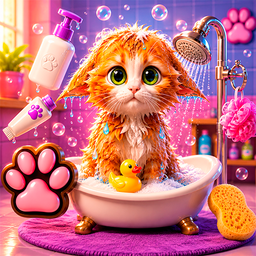
This one shifts the babysitting theme toward rescue care. Instead of maintaining a healthy pet, you're treating and healing injured kittens — bandaging wounds, giving medicine, providing comfort. The stakes feel higher because you're responding to urgent needs rather than preventing them. Great training for the triage mindset that helps in all babysitting games, plus you end up feeling genuinely good about your tiny digital veterinary work.
Help the kitten. Pets.
Staring at the clock and waiting for your shift or class to end is the ultimate afternoon slump. Help the kitten. Pets. is the perfect digital pick-me...
▶ Play FreeWhen You Need a Break: Puzzle Games to Unwind
Intense caretaking sessions can be mentally tiring. Sometimes you need to step away from the screaming virtual babies and do something calming. Puzzle games are the perfect cooldown — they engage your brain differently without the time pressure. Here are some solid picks to rotate into your session between babysitting runs.
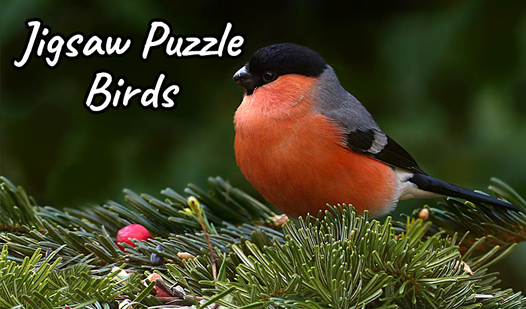
Jigsaw Puzzle Birds
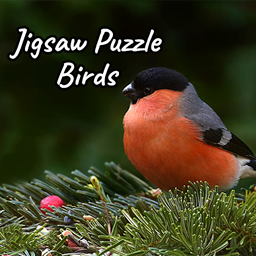
Peaceful bird photography transformed into satisfying jigsaw challenges. Great for decompressing after a chaotic babysitting level.
Jigsaw Puzzle Birds
Connecting scattered fragments into a cohesive image is a timeless pastime that keeps the mind sharp and focused. Jigsaw Puzzle Birds transforms this ...
▶ Play FreeHorses Jigsaw Puzzle
Beautiful horse imagery with clean puzzle mechanics. Scales in difficulty so you can match the challenge to your energy level.

Horses Jigsaw Puzzle
The art of assembling a mosaic from scattered fragments provides a meditative escape that sharpens cognitive focus while relieving daily stress. Horse...
▶ Play FreeHouses Jigsaw Puzzle
Architectural photography puzzles with a relaxing vibe. Perfect for the 5-minute cooldown between intense game sessions.

Houses Jigsaw Puzzle
Jigsaw puzzles remain one of the most effective ways to sharpen your focus and reduce daily stress through quiet, methodical organization. Houses Jigs...
▶ Play FreeForest Jigsaw Puzzles
Nature scenes assembled piece by piece. The forest imagery is genuinely calming and the puzzle mechanics are polished.

Forest Jigsaw Puzzles
Drag and snap scattered pieces together to reveal stunning high-resolution forest landscapes that bring nature right to your screen. Forest Jigsaw Puz...
▶ Play FreeCats Jigsaw Puzzle
Cats in puzzle form — arguably the ideal combination. Multiple difficulty levels, cute imagery, completely stress-free.
Cats Jigsaw Puzzle
Cat lovers and brain teaser enthusiasts will find their new favorite hobby inside Cats Jigsaw Puzzle. This engaging experience blends relaxation with ...
▶ Play FreeCities Jigsaw Puzzle
Urban photography broken into satisfying puzzle pieces. Good for players who prefer structured environments over natural scenery.

Cities Jigsaw Puzzle
Urban landscapes hold a unique charm that transforms every street corner into a potential masterpiece when broken into fragments. Cities Jigsaw Puzzle...
▶ Play FreeHow to Play Babysitting Games Like an Expert: Advanced Tactics
Once you've spent time with the genre, some higher-level patterns start to emerge. These are the habits that separate casual players from people who actually complete the hard levels and earn full stars.
Understand the Scoring System First
Before you play a level seriously, spend one run just observing the scoring. What gives bonus points? Is there a speed bonus? A no-miss bonus? A happiness multiplier? Different games weight these differently, and optimizing for the wrong thing is a common mistake. Some games reward pure speed; others reward keeping every bar above 50%; others care only about final state when the timer ends. Know what you're being graded on.
Don't Over-Upgrade Early
Counterintuitive tip: in games where upgrades cost in-game currency, don't dump everything into upgrades in the first few levels. The early levels are designed to be completable at base stats — that's how game designers balance progression. Save your upgrade budget for the levels where you're actually hitting a wall. Upgrading before you need to is just spending currency on problems you don't have yet.
Practice the Hardest Parts in Isolation
Many babysitting games have specific mechanics that spike in difficulty — the moment triplets appear, or when a sick baby plus a normal baby overlap. Recognize these as skills that need practice. If the three-baby level is destroying you, focus one run entirely on the sick-baby mechanic without worrying about score. Understanding one system deeply is more useful than scrambling through the whole level repeatedly.
Watch the Mood Cascade
In games with multiple characters, one unhappy character can affect others. A crying baby next to a sleeping baby will wake the sleeping baby. An upset pet might refuse to eat. Learning which events cascade prevents situations where fixing one problem immediately creates three more. Isolate problems before they spread.
Use the Tutorial Levels Again
Most babysitting games let you replay tutorial levels, and experienced players sometimes use them as a warm-up or upgrade farm. Low pressure, predictable patterns, quick completion. If you've been away from a game for a week, one tutorial run refreshes your muscle memory before you hit the hard stuff.
What Makes Babysitting Games Genuinely Satisfying
It's worth asking why this genre is so sticky. The obvious answer is "cute characters" but that's not really it — plenty of cute games don't hold attention the same way.
The real answer is response loops. Every action in a babysitting game produces an immediate, visible, emotional response. You feed the baby — it smiles. You play with the pet — it lights up. You heal the kitten — it purrs. These micro-rewards happen constantly, and they're satisfying in a way that more abstract game rewards (points, coins, levels) often aren't. The emotional feedback from a happy virtual creature is immediate and intuitive.
There's also the identity element. Being good at caring for something, even digitally, feels meaningful. Players who excel at babysitting games often describe a genuine sense of responsibility toward their virtual charges. That's not a bug in the design — it's the whole point.
And finally: manageable complexity. Babysitting games are complex enough to require skill and strategy, but the skills are legible. You can see exactly what went wrong when you fail. The gap between where you are and where you want to be is always visible, which makes improvement feel achievable and progress feel earned.