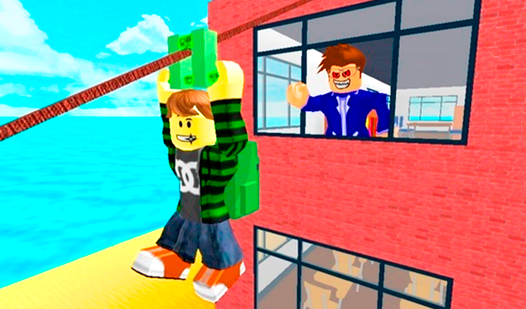
How to Play Avoid: Rules, Strategies & Free Games
If you've been searching "как играть в Avoid," you've landed in the right place. Avoid games strip gaming down to its rawest form — pure reaction, quick thinking, and the kind of one-more-try loop that eats hours without warning. No lengthy tutorials, no complicated stat trees. Just you, moving obstacles, and a shrinking window between survival and failure.
The appeal is universal. These games tap into something deep in how our brains work: pattern recognition under pressure, the micro-satisfaction of a near-miss, and that specific thrill of lasting one second longer than your previous run. Browser-based Avoid games have multiplied enormously over the past decade, covering everything from wave-dodging chaos to spikes-and-platforms precision challenges.
This guide covers everything — what Avoid games actually are, the core rules that govern almost every title in the genre, strategies that genuinely improve your survival time, and the best free games you can play right now without installing anything.
Что такое Avoid: The Genre Explained
At its core, an Avoid game has one primary mechanic: do not touch the bad thing. That's it. The "bad thing" might be waves, bullets, spikes, falling platforms, enemy projectiles, cars, meteors, or any of a hundred other obstacles a developer has dreamed up — but the verb is always the same: dodge it.
What separates a true Avoid game from a general action game is the purity of focus. In most action games, you have offensive tools — you can shoot back, build defenses, solve puzzles to neutralize threats. In Avoid games, your only tool is movement. You cannot destroy the obstacle. You cannot pause it. You can only not be where it is when it arrives.
This constraint sounds limiting, but it's actually what makes the genre so endlessly replayable. Because you're not managing a dozen systems, your full attention lands on the one thing that matters: reading patterns and reacting cleanly. Every failure is immediately understandable. You saw the obstacle coming, or you didn't. You had the reaction speed, or you didn't quite. The feedback loop is instant, which is why Avoid games are so addictive.
There are several distinct flavors within the genre:
Wave Avoiders — obstacles come in rhythmic or escalating waves. Your job is to read the pattern and position yourself in the gaps. These games tend to be slower to start and then ramp brutally.
Obstacle Course Runners — you're moving through a gauntlet of static or moving hazards. Timing and path-finding matter more than raw reaction speed.
Survival Arenas — you're stuck in a bounded space and must outlast increasingly dense threat patterns. No exit, no progress — just how long can you last.
Physics-Based Avoiders — your character has momentum, weight, and sometimes collision physics that work against you. The challenge isn't just dodging, it's controlling a body that doesn't always do what you want.
Understanding which type you're playing is the first step to playing it well.
Правила Avoid: Core Rules Across the Genre
Every Avoid game has its own specific mechanics, but there are foundational rules that apply almost universally. Learn these and you'll start any new title with a real advantage.
Rule 1: The Hitbox is Everything
Your character has a hitbox — the actual invisible boundary that registers collisions. In many Avoid games, especially pixel-art titles, the visual sprite is larger than the hitbox. This is intentional: it makes the game feel slightly more forgiving than it looks. Learn to trust that close shaves are often not actually hits. This changes how aggressively you can thread gaps.
Rule 2: Move to the Gap, Not Away from the Threat
New players instinctively move away from incoming obstacles. Experienced players move toward where there's space. This sounds like a small distinction, but it completely changes your spatial awareness. When you react to a threat by moving away from it, you might move into another threat. When you scan for open space first, your movement has a destination rather than just an escape direction.
Rule 3: Speed Kills (You)
Nearly every Avoid game rewards patience over aggression. The instinct to sprint to a "safer" position often puts you through intermediate danger you would have survived by moving slowly and deliberately. Smaller, controlled movements almost always outperform large frantic ones. The exception: when you need to fully cross an obstacle's path before it arrives. But even then, commit fully — half-measures are how you clip the edge.
Rule 4: The Edges Are Traps
Whether it's the wall of a survival arena or the edge of a platforming level, corners and edges severely limit your movement options. Avoid games frequently use this against you by funneling threats toward the sides. Center position is almost always safer than any edge position, even when an obstacle is currently in the center, because the center gives you two directions to escape rather than one.
Rule 5: Patterns Repeat (Until They Don't)
Most Avoid games use procedural or semi-random generation for obstacles, but many have underlying patterns — especially in the early phases. Pay attention to the first 10-20 seconds of each run. If you identify a recurring pattern, you can plan rather than react.
Avoid Стратегии: Tips That Actually Make a Difference
Knowing the rules is one thing. Actually applying strategy under pressure is another. Here are the techniques that consistently improve performance across Avoid-style games.
Slow Your Eyes Down
Counterintuitively, the single most effective technique for improving at Avoid games is to slow your eyes down. This doesn't mean reacting slowly — it means widening your visual field rather than fixating on your character or the nearest threat.
Most players in their first hundred runs look directly at their avatar. Experienced players look at the middle distance — the space ahead of and around their character — which gives more processing time before an obstacle becomes an immediate problem. You're reading the upcoming layout, not reacting to what's already next to you.
Practice this deliberately: in your next few runs, actively try to keep your gaze slightly ahead of your character's current position.
Use Anchored Movement
Rather than drifting freely across the screen, experienced Avoid players use anchored movement: they pick a default safe position (usually center, slightly offset in the direction that opens more options) and return to it between obstacle sequences. This means you're always starting each new threat from a known, favorable position rather than wherever the last reaction left you.
The return to anchor position is what separates reactive play from intentional play. It also trains muscle memory more effectively because your body knows what "safe" feels like spatially.
Learn Phase Transitions
Many Avoid games have phase transitions — moments where the difficulty jumps, the pattern changes, or the speed increases. These moments are almost always the hardest. Skilled players identify when a transition is coming (often signaled by sound, color, or score threshold) and consciously adjust their strategy: slow down movement, find the most open position available, and hold it through the chaos until the new pattern becomes readable.
Accept the "Death Run"
Sometimes a run is going to end badly and you know it early. Skilled players use these runs productively by experimenting: testing a movement they'd never risk in a "clean" run, pushing into a corner deliberately to see what the escape looks like, or watching how a new obstacle pattern develops from a different angle. This makes failed runs feel purposeful and accelerates your overall skill development.
Sound On, Always
A remarkable number of Avoid game players ignore audio. This is a mistake. Audio cues — spawning sounds, rhythm-based timing, music that syncs with obstacle patterns — carry significant information. Some games are practically unplayable at full potential without sound because the timing is built around it. Audio also activates different processing pathways in your brain, giving you more reaction surface area to work with.

Avoid Waves - Rescue Memes!
Stuck at your desk feeling the afternoon slump and needing a quick hit of adrenaline? Avoid Waves - Rescue Memes! is the ultimate brainrot escape desi...
▶ Play FreeBest Free Avoid Games to Play Right Now
Theory is fine. Games are better. Here are the strongest Avoid-style titles available free on FreeJoy right now.
Avoid Waves — Rescue Memes!
The name tells you exactly what you're in for. Waves — literal scrolling barriers — approach from the right side of the screen, and your job is to navigate through the gaps while collecting memes along the way. It sounds ridiculous, and it absolutely is, but the core wave-reading mechanic is genuinely well-designed. The gaps are fair but tighten as the speed increases, and the meme collection adds a secondary objective that forces you to take paths you wouldn't choose purely for safety.
This is a perfect entry point for the genre: immediate to understand, satisfying to improve at, and short enough per run that the retry friction is nearly zero.
Avoid Waves - Rescue Memes!
Stuck at your desk feeling the afternoon slump and needing a quick hit of adrenaline? Avoid Waves - Rescue Memes! is the ultimate brainrot escape desi...
▶ Play FreeBattle of Pixels
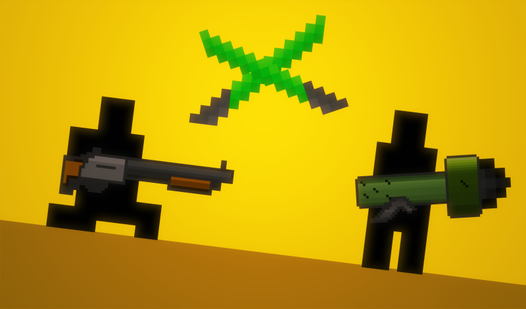
This one layers conflict onto avoidance — you're navigating destructible pixel environments while avoiding enemy attacks and returning fire. The avoidance challenge here is more spatial than pure reflex: levels break apart as combat happens, which means the safe zones shift dynamically throughout a fight.
What makes it special for Avoid players specifically is the destroyed-terrain element. Gaps you relied on close. New openings appear. The level actively changes shape around you, which forces the kind of adaptive spatial reading that elevates avoidance skills across all games.
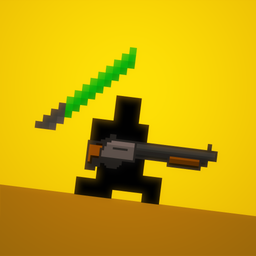
Battle of Pixels
Retro combat feels incredibly satisfying when every single piece of the environment explodes into tiny fragments upon impact. Battle of Pixels deliver...
▶ Play FreeGeometry Dash Wave: Original
If you've ever heard someone describe a game as "ruthlessly precise," this is what they mean. You control a small wave shape through a scrolling obstacle course, and the margin for error is genuinely tiny. The rhythm-action element sets this apart: the level is synchronized with the music, which means if you can feel the beat, you can anticipate the layout.
This is a harder recommendation for pure beginners — the skill floor is real — but for anyone looking for the deepest avoidance challenge in this list, this is it. Mastering even a single section here feels like a genuine accomplishment.

Geometry Dash Wave: Original
Staring at a blank screen while your coffee cools is the universal sign that you need a major productivity break right now. Geometry Dash Wave: Origin...
▶ Play FreeSurvival in Natural Disasters
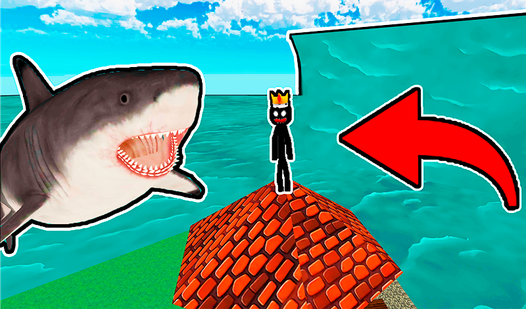
A different flavor of the same core skill: you're in a simulation where various natural disasters unfold — fires, floods, hurricanes — and you need to read the environment and position yourself to survive each one. The disasters have different threat shapes and timing, which means each one requires genuinely different spatial reasoning.
What this game teaches that pure reflex games don't is threat modeling: before you can dodge effectively, you need to understand what each disaster does and how it spreads. It's a slightly more cerebral Avoid experience, and one of the more unique in the genre.
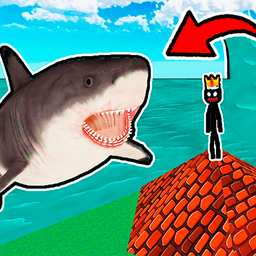
Survival in Natural Disasters
Outrun lethal tsunamis and survive chaotic meteor showers while testing your parkour instincts against the elements. Survival in Natural Disasters cha...
▶ Play FreePixel Path
Collapsing floors and moving spikes — Pixel Path throws classic platformer hazards at you in a minimal, focused package. Unlike the other titles here, Pixel Path forces vertical movement as much as horizontal, which adds a timing dimension that purely side-scrolling Avoid games don't have. Jumping through a spike array while the floor below you is actively crumbling requires holding two timers in your head simultaneously, which is a meaningful skill jump from flatter Avoid games.
More Avoid-Style Games Worth Playing
Beyond the featured titles, there's a solid range of Avoid-adjacent games across different styles and challenges.
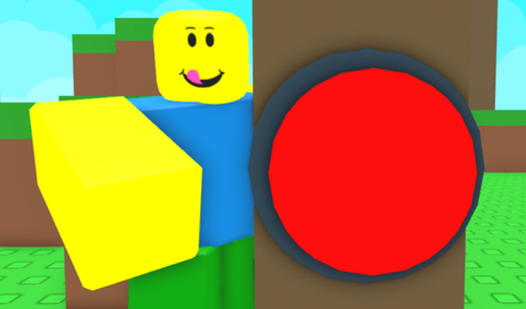
Obby: Find Buttons! puts obstacle-course mechanics front and center in a 3D environment, adding the complexity of three-dimensional spatial awareness to the usual avoid-the-hazard challenge.
Obby: Find buttons!
Platforming challenges often turn simple navigation into a high-stakes test of coordination and timing. Obby: Find buttons brings this exhilarating lo...
▶ Play FreeSummer Rider 3D moves the avoidance challenge into a racing context — reading traffic and terrain while maintaining speed. The time pressure creates a different kind of stress than stationary obstacle courses.
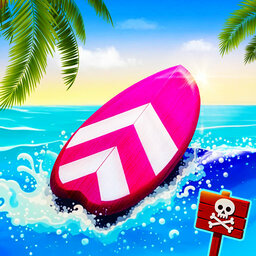
Summer Rider 3D
Fans of high-octane aquatic thrills will find their new obsession in Summer Rider 3D. This vibrant surfing game pits your reflexes against treacherous...
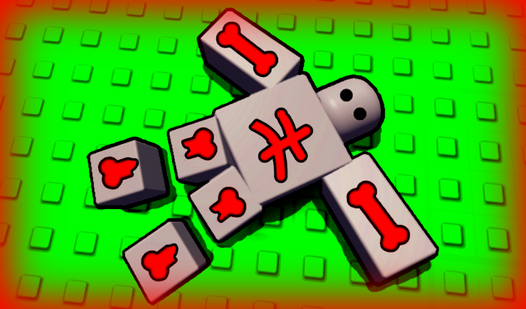
▶ Play FreeObby: Break Your Bones 3D Ragdoll flips the genre's premise with physics comedy — here, the failures are the entertainment. It's avoidance with deliberate absurdity, and it works.
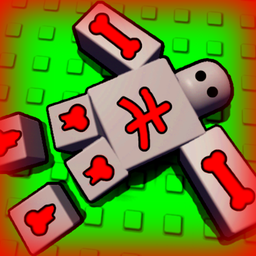
Obby: Break Your Bones 3D Ragdoll
Send your character tumbling down steep slopes and watch the hilarious chaos unfold in Obby: Break Your Bones 3D Ragdoll. You earn cash for every sing...
▶ Play FreeObby Snowboard Parkour combines movement momentum with avoidance, requiring you to account for your speed and trajectory while navigating hazards — a physics layer most pure Avoid games skip.

Obby Snowboard Parkour
Navigate treacherous icy platforms and pull off gravity-defying stunts in Obby Snowboard Parkour to prove your skills on the slopes. You control a sno...
▶ Play FreeSchool Breakout Obby wraps obstacle avoidance in a light narrative frame — you're escaping school — with environments that shift as you progress through the "breakout."
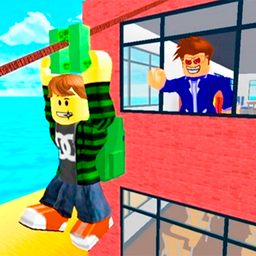
School Breakout Obby
Navigate complex corridors and leap over treacherous gaps to complete your daring School Breakout Obby mission. You must master precise timing and pla...
▶ Play FreeTrack Masters 3D is racing with avoidance demands: competitors, track hazards, and tight turns all create constant movement decisions.

Track Masters 3D
Master high-speed drift maneuvers and execute perfect overtakes as you climb the leaderboard in Track Masters 3D. Players navigate intense racing circ...
▶ Play FreeDrive Away Animals: Puzzle adds puzzle logic to movement — you're herding or redirecting animals away from hazards, which means your avoidance is spatial and strategic rather than purely reactive.

Drive Away Animals: Puzzle
Casual gamers looking for a relaxing way to spend their afternoon will find Drive Away Animals: Puzzle a perfect fit for their mobile browser. You tak...
▶ Play FreeBuilding Your Avoid Skills Over Time
One thing worth understanding about Avoid games: improvement feels nonlinear. You'll play the same game twenty times and feel like you're making no progress, then on run twenty-one something clicks and your survival time doubles. This happens because avoidance skill is mostly unconscious pattern recognition — your brain is building the neural map even when your performance doesn't visibly show it.
The practical implication: don't measure progress run-by-run. Measure it week-by-week. If you're playing regularly, you will improve. The frustrating plateau before the breakthrough is a normal and universal part of how these games are learned.
Keep short sessions — five to ten minutes — rather than grinding for hours at a stretch. Fatigue dramatically degrades reaction speed and decision-making, and playing while mentally tired builds bad habits. Short, focused sessions consistently outperform long, exhausted ones for skill development.
Finally, variety helps. Playing different Avoid games exercises slightly different aspects of the core skill set. A wave-avoider trains pattern prediction. A physics platformer trains momentum control. A survival arena trains positioning and path planning. Rotating between them builds a more complete skill base than grinding one title indefinitely.