How to Play Aviation: Rules, Strategies & Free Games
If you've ever looked up "как играть в Aviation" and found yourself lost in a sea of vague tips, this guide is your fix. Aviation games cover a genuinely wide spectrum — from casual distance-chasing arcade titles to white-knuckle combat missions and precision landing challenges — but they share a common core: the freedom and physics of flight, compressed into something you can play right now in your browser.
This article breaks down the foundational rules that apply across most aviation games, the strategies that actually work (not just the obvious stuff), and a curated list of the best free aviation games you can jump into on FreeJoy without a download or registration in sight. By the end you'll understand not just how to survive your first flight, but how to start flying like you mean it.
What Is Aviation as a Game Genre?
The word "aviation" describes the practice of flying aircraft, and in gaming it's become a broad umbrella covering everything from physics-based obstacle runners and upgrade progression games to dogfighting simulators and turret defense experiences. What all these games share is that the sky — not the ground — is your playing field.
Aviation games add a vertical dimension that ground-based games simply don't have. You're not just navigating left and right; you're managing altitude, momentum, and often three competing resources at once: fuel, speed, and position. That extra complexity is exactly what makes the genre compelling. There's always one more variable to optimize, one more technique to master, one more second to shave off your approach time.
On FreeJoy, aviation games range from deeply satisfying upgrade loops where you push a little plane a little farther each run, to intense combat scenarios where a single wrong move ends your mission. The five featured games in this guide represent the full range, and each one teaches you something different about what it means to fly well.
Как играть в Aviation: Core Rules Every Pilot Needs to Know
Before jumping into strategy, it helps to understand the rules that underpin almost every aviation game. These aren't specific to one title — they're the physics-and-mechanics layer that the whole genre is built on.
Thrust, Lift, and the Fight Against Gravity
Real aircraft stay in the air because of the relationship between thrust (forward movement) and lift (upward force generated by wings moving through air). Most aviation games model this in simplified form. The practical takeaway:
- Lose enough speed and you lose lift. When lift disappears, gravity takes over. This is the single most common cause of beginner crashes.
- Maintaining forward momentum is almost always more important than perfect steering. A slightly off-course plane that's still flying beats a perfectly aimed plane that's stalling every single time.
- Throttle is not a binary switch. Beginners tend to slam throttle to maximum and leave it there, or cut it entirely. The skill is in the modulation: matching your throttle to what the current moment demands.
Altitude Is a Resource
Think of altitude the way you'd think of health in a fighting game — it's something you accumulate when the situation is safe and spend when things get dangerous. Flying high gives you reaction time, escape options in combat, and room to recover from errors. Flying low is efficient but unforgiving. Learning when to climb and when to commit to low-altitude flight is one of the core skills that separates casual players from experienced ones.
Fuel, Ammo, and Resource Scarcity
Many aviation games layer resource management on top of the flight mechanics. Running out of fuel or ammo mid-mission is never a gameplay-stopping bug — it's intentional design pressure. Build the habit early: glance at your resources every ten seconds. Identify where resupply points or fuel pickups are before you need them. Players who establish this habit never get caught empty.
Objectives Before Exploration
This sounds obvious but it's where most new players go wrong: they start exploring the map, chasing secondary objectives, or trying cool maneuvers before they've secured the primary goal. Lock in the main objective first. Everything else is a luxury.
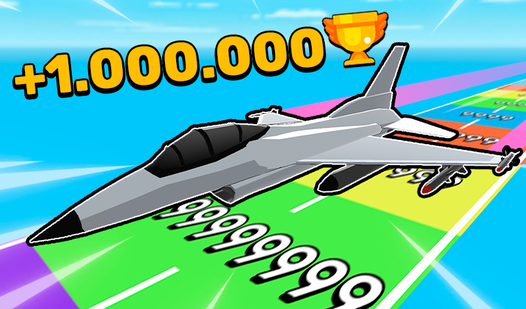
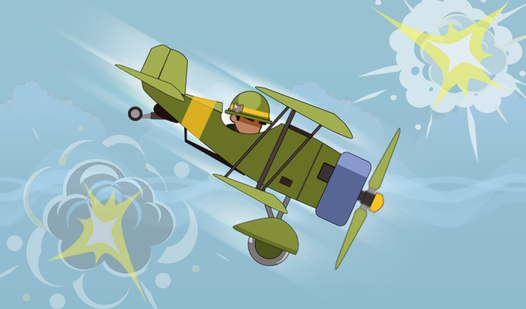
The first featured game puts these fundamentals to a direct test. Obby: Fly the Farthest in an Airplane is a distance-based progression game where every run you're trying to push your small aircraft further than the last. The loop is elegantly simple — launch, fly, collect in-flight resources, land (or crash), spend on upgrades, repeat — but the upgrade decisions genuinely matter. Fuel capacity, engine power, and aerodynamic efficiency all interact, and the order in which you upgrade them significantly changes your distance ceiling. Early game tip: fuel upgrades pay off faster than speed upgrades because more flight time means more resources collected per run.
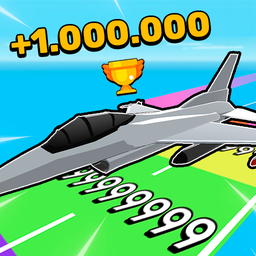
Obby: Fly the Farthest in an Airplane
Navigate your aircraft through challenging obstacle courses by collecting energy to extend your flight distance in Obby: Fly the Farthest in an Airpla...
▶ Play FreeStrategies That Actually Work in Aviation Games
General tips exist everywhere. What follows are specific, actionable strategies based on how aviation games are actually designed — the patterns in their mechanics that you can exploit once you know they're there.
Upgrade Order Matters More Than You Think
In any aviation game with an upgrade tree, the worst thing you can do is spread your resources evenly across everything. Pick the stat that is currently bottlenecking your performance and max it before touching anything else. In distance-based games, that's almost always fuel early and speed later. In combat games, it's weapons first, then maneuverability, then armor. Playing through upgrade trees in random order means you plateau early and stay there.
Learn Enemy Patterns Before Engaging
Combat aviation games rarely use fully random enemy behavior. Most enemy aircraft follow predictable loops — a patrol circuit, an attack run followed by a banking pullout, a fixed firing arc they can't deviate from. Watch enemies for a full cycle before opening fire. Once you know the pattern, you can identify attack windows that let you score hits without exposing yourself. This single habit will increase your survival rate in air combat more than any upgrade.
Altitude as a Tactical Weapon in Dogfights
Height advantage in aviation combat is a real, usable mechanic. When you dive on an enemy from above, you gain speed from the descent, attack from an angle that's harder to track, and have more kinetic energy to spend on the engagement. Conversely, if someone is tailing you, climbing forces them to spend energy matching your altitude change. Many pursuits break off naturally when the chasing plane runs out of energy climbing after you. Getting comfortable with the altitude-as-weapon concept transforms how you approach every aerial engagement.
The Controlled Stall Turn
In slower-moving aviation games, the stall turn is an advanced technique worth learning. At the top of a climbing turn, deliberately reduce your speed to near-stall. At that moment, your turning radius tightens dramatically because your forward momentum is minimal. Pilots use this to reverse direction almost on the spot. It's counterintuitive — slowing down to turn faster — but it works in most games that model momentum rather than just direction.
Approach Landings with Commitment
Landing challenges punish indecision more than they punish imperfect angles. The typical beginner crash on a landing approach: the runway comes into view, the player suddenly doubts their angle, makes a large correction, overcorrects, makes another large correction, and arrives at the threshold completely out of control. The fix is commitment: decide on your approach angle early, make small progressive corrections, keep a small amount of throttle on right up to touchdown for control authority, and then hold your nerve. A slightly imperfect committed landing beats a panicked "perfect" approach every time.
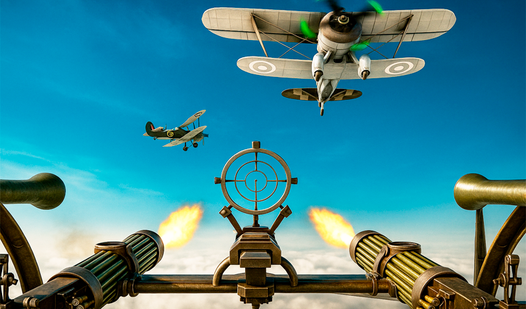
Air combat from the ground-up perspective is the focus of Turret Gunner: Air Raid, which puts you behind an anti-aircraft gun instead of inside a cockpit. Wave after wave of enemy aircraft comes at you from multiple angles — fighters, bombers, fast movers — and your job is to track, lead, and destroy them before they get past your position. Leading your shots (aiming at where the target will be, not where it is) is the entire skill ceiling of the game, and the escalating wave count means you're always being pushed to improve. It's a brilliant way to understand how air combat looks from the defensive side.
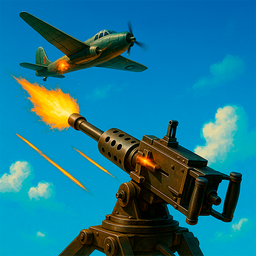
Turret Gunner: Air Raid
Lock onto incoming targets and unleash a hail of bullets as you defend the skies in Turret Gunner: Air Raid. This high-octane warplane simulator puts ...
▶ Play FreeLead Your Shots — Always
Whether you're flying a fighter or manning a turret, projectile travel time is a mechanic you can't ignore. Bullets and missiles take time to reach their target. At any meaningful range, firing directly at a moving enemy means hitting where they were, not where they are. The habit to build: always aim at the space in front of your target, and increase that lead as range increases. This single adjustment improves your hit percentage more than any other change.
Don't Fly in Straight Lines
In any game where enemy fire is a factor, straight-line flight is a death sentence. A simple weaving pattern — S-curves, altitude changes, brief direction reversals — makes you dramatically harder to track without costing you much forward progress. The cognitive load on the enemy AI (or real opponent) of tracking a non-linear target is much higher than tracking a straight line. Make weaving a default habit, not something you remember to do when things get dangerous.
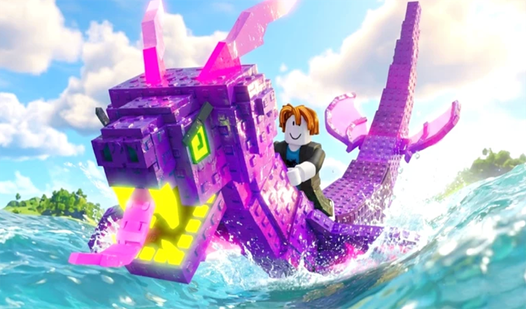
For something completely different, Obby: Dragon Training trades conventional aircraft for flying dragons, which changes the feel of flight considerably. The physics are looser, more flowing, and the sky opens up in a different way when your ride breathes fire. The core challenge is collecting energy orbs mid-flight to maintain altitude and power — run out of energy and your dragon descends, which in tighter sections means hitting walls or the ground. The skill ceiling is about smooth routing: planning your flight path through clusters of orbs rather than chasing them individually, which is a great mental model for fuel management in conventional aviation games too.
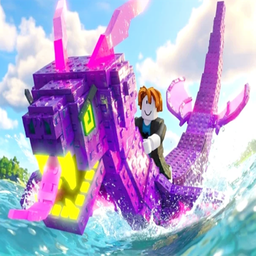
Obby: Dragon Training
Soar through the clouds and master the skies as you guide your legendary creature through challenging courses in Obby: Dragon Training. You will navig...
▶ Play FreeКак играть в Aviation: Advanced Pilot Techniques
You've got the basics. Here's what the best players actually do differently.
Pre-Flight Map Reading
Before any mission, run, or level, take five seconds to look at the full layout. Where are the obstacles concentrated? Where are the safe corridors? Where do enemies patrol? Having a rough mental map means you're navigating a plan rather than reacting to surprises. In time trial modes this can shave entire seconds off your run. In combat missions it's the difference between walking into an ambush and setting one.
Camera Management
Most aviation games offer at least some camera control. A wide, pulled-back view maximizes your awareness bubble — you see more of the map, spot threats earlier, and have more reaction time. A close-in view gives you precision for fine maneuvers and landing. Learn to switch between these modes as the situation demands: wide during open-sky combat, close during approaches and tight obstacle sections.
Sound as Information
Aviation games are filled with audio cues that many players ignore. Engine strain when you're pushing past your thrust limit. Stall warnings as you bleed speed. Lock-on alarms before a missile arrives. Wind changes that signal turbulence. Playing with sound on is genuinely playing with more information. Players who mute their game are flying with one eye closed.
The Grind Pays Off
In upgrade-progression aviation games, the fastest path to difficulty is skipping the early grind. Spending extra time on early levels to fully max your initial upgrade tier before advancing pays back double later. Players who rush through tend to hit mid-game walls that feel impassable — and often are, with an under-upgraded loadout. The games are designed to reward patient grinding.
Fail With Purpose
The best aviation players crash constantly — especially on new games and new levels. The difference is that they treat each crash as specific information: what was the last decision that caused this, and what would I do differently? If you're not crashing occasionally you're almost certainly playing too conservatively. Controlled risk-taking is how you find the edges of what's possible.
Best Free Aviation Games on FreeJoy Right Now
Crazy Crash Landing
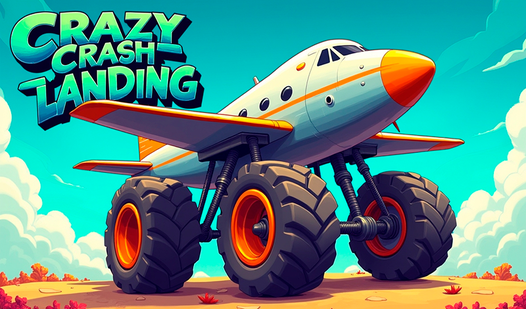
Crazy Crash Landing is the purest test of landing skill in the collection. You're always given a damaged, difficult-to-control aircraft and a runway that demands precise approach management. The combination of arcade speed and flight simulation precision is unusual and genuinely compelling — you're moving fast enough that every second of imprecision compounds, but the controls are accessible enough that you always feel like the crash was your fault, not the game's. Each level adds new complications: short runways, crosswinds, mechanical failures, and terrain that forces late adjustments.
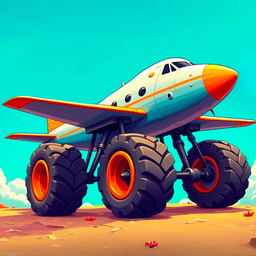
Crazy Crash Landing
Stuck in a boring meeting or just need to kill time with some high-octane action? Crazy Crash Landing provides the perfect adrenaline shot to turn you...
▶ Play FreeThe specific tip for Crazy Crash Landing: start your approach from further away than feels necessary. Almost all beginner crashes happen because the player started their descent too late, then came in too fast and too steep. Identify the runway early, start reducing throttle and adjusting your nose angle when the runway is still a third of the screen away. Smooth, early, committed approaches almost always work; last-second corrections almost never do.
Bomber XXL
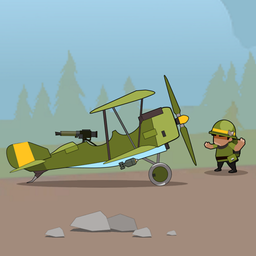
Bomber XXL puts you in the cockpit of a heavy bomber pushing through hostile airspace. Enemy fighters come at you from multiple directions while ground positions try to track you with flak. Your job is to stay airborne, manage your defensive weapons, and get your payload to the target. The game rewards aggressive, unpredictable movement — players who fly in straight lines get shredded almost immediately. Vary your altitude and heading constantly, save your burst-fire for close-range threats, and identify the safe corridor through each wave before committing.
Bomber XXL
Stuck in a long meeting or just waiting for a slow download, wishing you were soaring through the clouds instead? Bomber XXL turns those dull moments ...
▶ Play FreeRobot and Car: Transformers Shooter
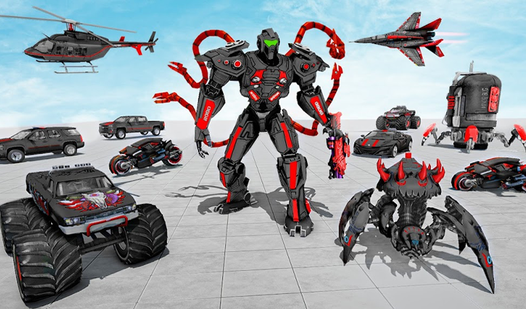
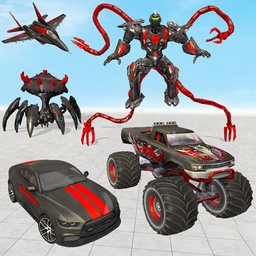
Robot and Car: Transformers Shooter brings a transforming mechanic to aerial combat — switching between forms gives you access to different weapon systems and movement profiles. Timing your transformations is the core skill loop. Switch too early and you sacrifice mobility; switch too late and you miss the firing window. It's a layered system that rewards players who learn the transformation timing deeply.
Robot and Car: Transformers Shooter
Staring at the clock waiting for your shift to end or just need a mental reboot during a long afternoon is a common struggle. Robot and Car: Transform...
▶ Play FreeRed - Blue Leader
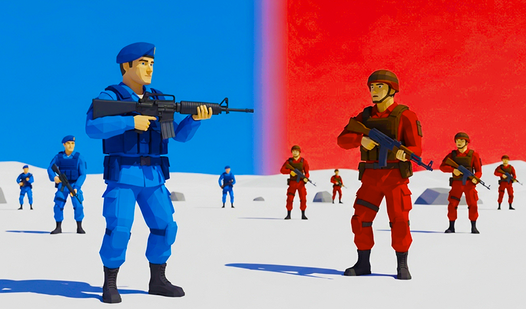
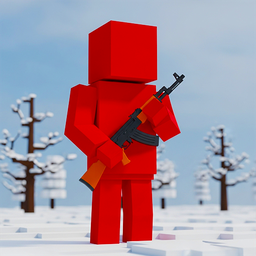
Red - Blue Leader sets up a head-to-head aerial battle where each side fights for air superiority through strategic position play as much as raw combat. The leader mechanic adds a command layer on top of the shooting, making it a more thoughtful game than most aerial combat titles. Strong positional awareness — knowing where your units are relative to the enemy at all times — is the defining skill.
Red - Blue Leader
Fans of chaotic battlefield confrontations will find their new obsession in Red - Blue Leader. This high-octane shooter turns every session into a fra...
▶ Play FreeDrone Simulator: Ancient Russ
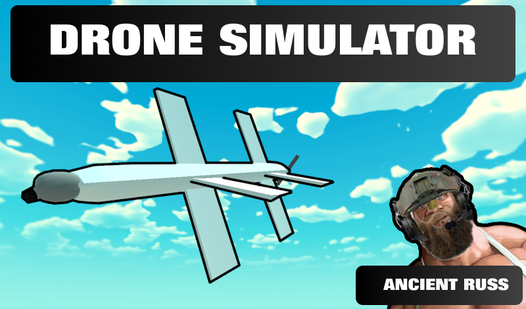
Drone Simulator: Ancient Russ is the most atmospheric title in this lineup. Set over ancient Russian landscapes, it offers a more grounded, simulation-leaning flight experience compared to the arcade titles. The pacing is slower, the environments are more detailed, and the challenge comes from precision control rather than reaction time. If you want something with more of a contemplative feel than a combat feel, this is the one.
Drone Simulator : Ancient Russ
Staring at a blank screen while your motivation slowly evaporates is the worst kind of afternoon slump. Drone Simulator : Ancient Russ is the chaotic ...
▶ Play FreeWhy Aviation Games Are Worth Your Time
Aviation games offer a genuinely different experience from most other browser game categories. The three-dimensional freedom — even when abstracted into a 2D or isometric view — creates a sense of space that ground-based games can't replicate. More than that, the learning curve in aviation games is tangible. The gap between your first flight and your fiftieth is enormous, and you can feel yourself improving with every session: your landings getting smoother, your combat instincts sharpening, your upgrade decisions becoming more efficient.
The games in this guide span the full range of what aviation gaming can be. Obby: Fly the Farthest and Dragon Training offer the satisfying loop of incremental improvement. Crazy Crash Landing and Bomber XXL put your skills under real pressure. Turret Gunner: Air Raid gives you the combat experience from a completely different angle. Each one teaches you something that transfers to the others.
All of them are free, all of them run in your browser, and none of them require an account. Just fly.