How to Play Attention Games: Rules, Strategies & Free Play
Trying to figure out how to play Attention games and sharpen your focus while having fun? You've landed in the right spot. Attention-based games are a broad, fast-growing category of browser games that challenge your ability to spot patterns, notice differences, track moving objects, and stay mentally sharp — all while being genuinely entertaining. This guide breaks down everything: what Attention games are, how the rules work across different formats, which strategies consistently improve your scores, and where to find the best free options online right now.
What Are Attention Games?
Attention games are any games where the primary challenge involves focused perception — spotting differences between images, matching hidden tiles, tracking patterns across a busy board, or reacting quickly to visual cues. The "Attention" tag covers a surprisingly wide range of game types: spot-the-difference puzzles, mahjong and tile-matching, hidden object hunts, puzzle games that require sustained concentration, and simulation games where managing multiple objectives demands constant awareness.
What makes this genre distinct isn't a single mechanic — it's the mental demand. These games train selective attention (focusing on one thing among distractions), sustained attention (staying focused over time), and divided attention (tracking multiple things at once). They're often used casually as brain-training tools, but the most compelling ones are just flat-out fun without needing a self-improvement angle.
The games span difficulty levels from relaxing tile puzzles you can play with one hand to precision challenges that'll have you leaning forward in your chair, eyes locked on the screen. Most Attention games are single-player and browser-based — no installation needed, just open and play.
What to Expect When You First Start
When you first open an Attention game, the setup is usually minimal. Most games in this category skip long tutorials and drop you into the action quickly. You'll typically get a brief visual explanation — highlighted tiles, a quick intro screen, an arrow or two — and then it's on you. That's by design. Attention games reward observation. The fastest way to learn is to watch, experiment, and iterate. Your brain is literally the controller here.
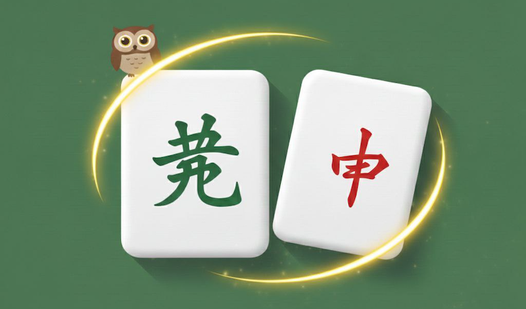
Take Mahjong: Attention Test as a prime example. It throws a complex tile board at you immediately, trusting that you'll figure out the matching rules by doing. The game is designed specifically to stress-test your pattern recognition in a mahjong format, and it succeeds — each session feels like a genuine mental workout wrapped in a satisfying click-match loop.
Attention Game Rules Explained
Because Attention is a genre rather than a single game, the rules depend on which specific format you're playing. But there are common patterns across every type.
Spot-the-Difference Rules
These are among the most recognizable Attention games. Two nearly identical images appear side by side (or stacked), and your job is to find a set number of differences — usually between 5 and 10. Core rules typically include:
- Time limit: You have a set window, often 60–120 seconds, to find all differences.
- Click accuracy: Click directly on the different spot in either image. Misclicks cost points or trigger a brief penalty freeze.
- Difference count: The game tells you exactly how many differences exist. Find them all to complete the level.
- Hints: Most games offer limited hint uses — tap the hint button and one difference gets circled.
The strategic element here is your scanning method. Don't move your eyes randomly. Divide the image into mental sections — left third, center third, right third — and compare the same region between both images before moving on. Anomalies pop out reliably when you compare sections rather than scanning the whole image at once.
Find 7 Differences: Game of Attention is one of the sharpest implementations of this format. Two detailed images, seven hidden differences, and a timer counting down. The art style and image complexity are well-matched to the difficulty curve — early levels are approachable, while later stages will genuinely challenge even experienced players. Each found difference gives a clean feedback response that keeps you engaged round after round.
Mahjong and Tile-Matching Rules
Mahjong-style Attention games ask you to clear a board by matching identical tiles. The classic rules:
- Matching pairs: Select two identical tiles to remove them from the board.
- Accessibility requirement: A tile can only be selected if it's not blocked by adjacent tiles on the left or right, and not covered on top (the exact rules vary by variant).
- No more moves = stuck: If no accessible pairs remain, you either lose or use a shuffle.
- Time-based scoring: Faster clears earn significantly more points in competitive modes.
The attention challenge here is visual: finding matching pairs across a complex, visually cluttered board requires pattern recognition and focused scanning. The tiles often look similar, and the board is intentionally designed to make identical tiles hard to spot at a glance.
Puzzle and Simulation Rules
Games like TropicVille sit at the intersection of attention and casual strategy. Here the rules involve merge mechanics — combining identical objects to create new, higher-tier objects — combined with resource awareness. You're tracking what's on your board, what can merge, what's about to expire, and how your board state is evolving over time.
The attention demand here is divided: you're processing the board as a whole while simultaneously focusing on individual merge chains. It's a different cognitive challenge than spot-the-difference but equally demanding in its own way. TropicVille's tropical merge format keeps the experience visually pleasant even when the board management gets complex.

TropicVille
Did you know that merge games are renowned for their ability to provide both a relaxing escape and a satisfying challenge? In TropicVille, you'll get ...
▶ Play FreeAttention Strategies That Actually Work
These are practical strategies that apply across different Attention game types, built on understanding how visual perception and focus actually function.
Use Peripheral Vision, Not Just Direct Focus
Most players fixate on one spot and mechanically shift their focus around the screen. This is slow and exhausting. Instead, practice soft focus — look at the center of the board or image and let your peripheral vision detect anomalies. Your peripheral vision is actually better at detecting pattern breaks and subtle differences than your center vision, which is optimized for fine detail.
In tile games, this means glancing at the full board before clicking anything. In spot-the-difference games, try relaxing your gaze briefly and seeing if anything "jumps out" before starting your systematic section scan.
Clear Edges and Top Layers First (Tile Games)
In any mahjong-style game, top-layer and edge tiles are always accessible. Clearing them opens more matches on the layers below. The common beginner mistake is matching the most visually obvious pair rather than the strategically important one.
Before each match, ask yourself: does this match open new tiles, or does it just remove two tiles from somewhere already accessible? Prioritize matches that reveal new options, even if a different accessible pair is more obvious.
Set a Scanning Pattern (Spot-the-Difference)
Create a consistent scanning grid in your mind and stick to it. Left column → center column → right column, or top half → bottom half. Your brain filters out identical information quickly; anomalies register when you compare the same region between two images methodically. Inconsistent scanning means you cover some areas twice and miss others entirely.
Use Hints as a Last Resort
Hint systems exist to prevent frustration, not to replace effort. Using hints immediately trains your brain to skip the observation phase. Push yourself to find at least 80% of the differences or matches on your own before reaching for the hint button. Pattern recognition specifically improves through productive struggle — not through shortcuts.
Play in Short, Focused Sessions
Attention games are more effective and more enjoyable in 15–25 minute focused sessions than in extended marathons. Sustained focus degrades measurably after 20–30 minutes of concentrated visual tasks. Shorter sessions keep you sharp, make each game feel fresh, and mean your accuracy stats actually reflect your ability rather than your fatigue level.
Lamplighter is a game that rewards exactly this kind of deliberate, focused approach. Navigating a dark and corrupted town environment demands that you stay alert to visual cues — miss a detail and you'll find yourself backtracking. It's atmospheric, slow-burning attention gameplay that punishes rushing and rewards careful observation.

Lamplighter
Puzzle lovers and fans of cozy town restoration games are going to adore Lamplighter! A creeping darkness has engulfed Lantern Town, and only you, th...
▶ Play FreeBest Free Attention Games Online
Here's a closer look at more of the best free Attention games you can open right now on FreeJoy — no account, no download, no waiting.
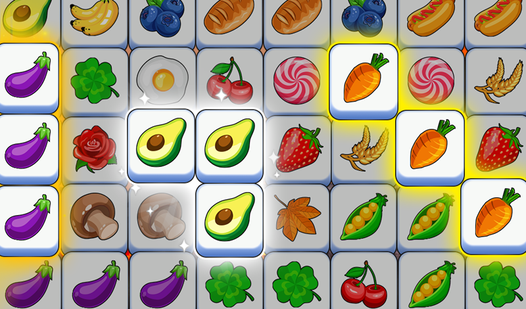
Master of Tiles
Master of Tiles brings a fresh angle to tile-matching attention games. The board layout shifts significantly between rounds, which prevents your visual system from settling into a comfortable pattern — you genuinely have to look fresh each time. The game rewards both speed and strategic planning, finding a strong balance between quick-reaction attention and deliberate observation. It's one of the better games in this category for players who want a challenge that scales with their skill.
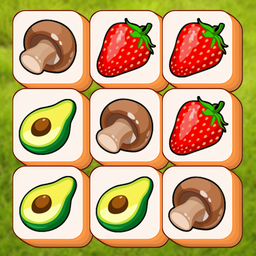
Master of Tiles
Ever wondered what makes a puzzle game truly captivating? Master of Tiles draws you in with its simple premise and keeps you hooked with surprisingly ...
▶ Play FreeCozy Mahjong
If you want the attention training without the pressure of a countdown timer, Cozy Mahjong delivers. The relaxed pace and pleasant visual design make it easy to settle into deep focus — the kind of absorbed state where you're fully present without feeling stressed. It's excellent for evenings or casual weekend sessions when you want mental engagement without competitive pressure. The tile artwork is detailed enough to make matching genuinely satisfying rather than mechanical.
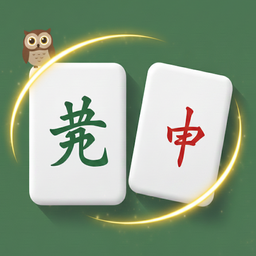
Cozy Mahjong
Match identical tiles and clear the board in Cozy Mahjong, a relaxing online puzzle experience designed to unwind your mind. Swipe or click to select ...
▶ Play FreeBlock Puzzle Gem
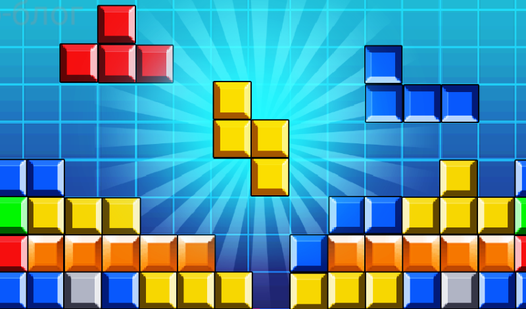
Block Puzzle Gem shifts the attention demand from pattern recognition to spatial awareness. You're placing gem-colored blocks to complete lines and columns, which requires tracking available space while anticipating which blocks are coming next. It's less about spotting differences and more about maintaining a mental map of a dynamic board state — a different flavor of focused attention that's equally rewarding and surprisingly easy to lose track of time in.
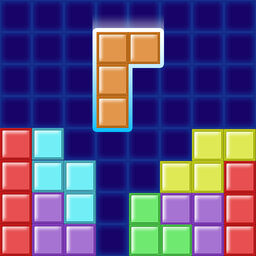
Block Puzzle Gem
Ever wondered what makes classic puzzle games so endlessly engaging? Block Puzzle Gem takes that timeless appeal and polishes it to a brilliant shine,...
▶ Play FreeSpider Solitaire (1, 2, and 4 Suits)
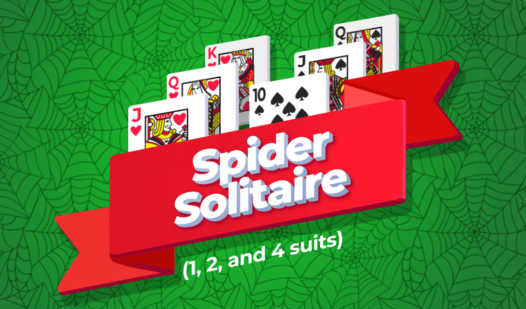
Spider Solitaire is a legitimate attention game that often gets overlooked in this category. Managing multiple card columns, tracking which sequences are in progress, and planning moves several steps ahead requires sustained divided attention — especially in the 4-suit variant, which is brutally demanding. It's the most cognitively heavy option on this list and genuinely excellent for players who want something that tests mental endurance alongside pattern recognition. The 1-suit version is a solid entry point; 4-suit is for when you're feeling confident.
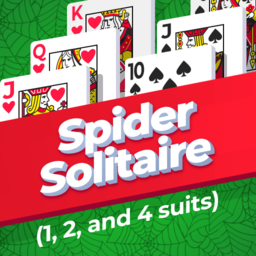
Spider Solitaire (1, 2, and 4 suits)
Arrange descending sequences of the same suit from king to ace to clear the board. Spider Solitaire offers a classic card game experience with multipl...
▶ Play FreeWhy Attention Games Are Worth Your Time
There's solid reasoning behind why attention-based games have maintained popularity far beyond the casual gaming trend cycles. Here's what's actually happening when you play:
Visual search speed improves. Spot-the-difference and tile-matching games train your visual search system. With regular practice, your brain becomes faster at filtering irrelevant visual information and zeroing in on targets. This effect transfers beyond gaming to real tasks like proofreading, quality checking, and noticing environmental hazards.
Working memory gets exercised. Tile-matching games load your working memory with positions of tiles you've partially seen. Remembering these locations while scanning for new matches directly exercises working memory capacity — one of the most practically useful cognitive resources.
Error detection sharpens. Spot-the-difference games train exactly the skill that underlies quality checking, code review, and any task where you're comparing two states. Finding seven subtle differences in a detailed image is the same cognitive operation as catching a regression in a UI screenshot.
Focus duration extends. Any Attention game played for 10+ minutes trains sustained focus — the ability to maintain concentration on a task over time. This is arguably the most transferable benefit, and it's the one that degrades fastest with distraction-heavy media habits.
The best part: you don't need to think about any of this while playing. Just play, and the engagement does the work.
Common Mistakes That Kill Your Score
Knowing what not to do is as useful as knowing what to do:
Moving too fast. In spot-the-difference games especially, beginners click frantically and miss subtle differences that reward careful observation. The timer is usually generous enough to allow methodical scanning — use it.
Ignoring the board overview. In tile games, jumping into matches immediately without scanning the full board first is almost always suboptimal. Spend 5–10 seconds surveying everything before making your first move.
Playing when mentally fatigued. Attention games require actual cognitive energy. Playing when you're tired, distracted, or multitasking produces poor results and isn't enjoyable. Short sessions when reasonably fresh consistently outperform long sessions when exhausted.
Expecting rapid improvement. Attention and pattern recognition skills improve across days and weeks of practice, not in one session. Track your scores over time and look for gradual improvement rather than expecting breakthroughs in a single sitting.