How to Play 2048: Rules, Strategies & Free Games
If you've ever wondered how to play 2048 and why so many people get completely hooked on this deceptively simple puzzle, you're in the right place. This guide covers everything you need — the core rules, the smartest strategies for beginners and advanced players, and the best free 2048 games you can play right now without downloading anything or creating an account.
What Is 2048?
2048 is a sliding puzzle game created by Italian developer Gabriele Cirulli and released in March 2014. The concept is elegantly minimal: a 4×4 grid, numbered tiles, and one rule — slide tiles together. When two tiles with the same number collide, they merge into a single tile with double the value. The target is to create a tile showing the number 2048.
What makes 2048 so compelling is the gap between how simple it looks and how deep it actually gets. Anyone can understand the mechanics in about thirty seconds. But consistently reaching 2048 — let alone going beyond it — requires genuine strategic thinking and careful board management.
The game starts with two tiles, usually both showing the number 2 (occasionally a 4). After each move you make, a new tile — either a 2 or a 4 — appears in a random empty cell. The game ends when the board is completely full and no adjacent tiles share the same value, leaving no legal moves.
The original game became a viral sensation almost immediately after release. Millions of clones and variations followed, each putting a fresh spin on the core mechanic. Today, the 2048 family of games spans cosmic themes, food gardens, cute animals, hexagonal grids, and 3D puzzles — but the underlying logic stays the same. Once you learn how to play 2048 properly, you can approach any variant with confidence.
How to Play 2048: Rules and Basics
Let's get concrete. Here's exactly what you need to know to start playing:
The grid: A standard 4×4 board with 16 cells. You start with 2 tiles placed in random positions.
Controls: On desktop, use your keyboard arrow keys — up, down, left, right. On mobile, swipe in any of the four directions. There are no other controls.
How merging works: When you swipe, every tile on the board slides as far as possible in that direction. If two tiles with the same number meet during that slide, they merge into one tile worth twice the value. Two 4s become an 8. Two 128s become a 256. Two 512s become a 1024.
Scoring: Your score increases by the value of every new tile created through merging. Merge two 512s and you gain 1024 points. The score accumulates throughout the game.
New tiles after each move: After every swipe where at least one tile moved, a new 2 or 4 tile appears randomly in an empty cell. You have no control over where it lands.
How you win: Create a tile showing 2048. Most versions let you keep playing after that to pursue a higher score.
How you lose: Every cell is occupied and no two adjacent tiles (up, down, left, or right) share the same value. No legal moves remain.
One rule that trips up new players: merges only happen once per swipe per collision chain. If you have tiles 2-2-4 lined up in a row and swipe left, the two 2s merge into a 4, but that new 4 won't immediately merge with the existing 4 next to it in the same move. This prevents chain reactions and keeps each swipe deliberate.
Block Blast 2048
Number merge games have a unique way of keeping your brain sharp while providing that oddly satisfying flow state. Block Blast 2048 takes this classic...
▶ Play FreeThe Corner Strategy: Your Most Important Tool
The corner strategy is the single most impactful concept in how to play 2048 well. Mastering this one approach will take you from occasional wins to consistent ones.
The core idea: Choose one corner of the board — most players pick bottom-left or bottom-right — and keep your highest-value tile anchored there at all times. Never voluntarily move it away from that corner.
How to execute it: Limit yourself to primarily two or three swipe directions that push tiles toward your chosen corner. If your high tile is in the bottom-right corner, you swipe right and down as your primary moves. Left and up swipes happen occasionally, but only when necessary and only after thinking through the consequences.
The snake arrangement: The ideal board layout looks like a snake of decreasing values running from your corner. In the bottom row (right to left): 1024 — 512 — 256 — 128. In the second row (left to right): 64 — 32 — 16 — 8. The chain zigzags down from the corner, with each value being half the one before it.
Why it actually works: When tiles are arranged in decreasing order from one corner, every merge creates a tile that fits naturally into the chain. You're constantly feeding smaller tile values into a pipeline that eventually produces larger ones. The board stays organized, and you avoid the nightmare scenario of a high-value tile getting stranded in the wrong location with no way to merge it.
The cardinal sin: Moving your highest tile away from the corner by swiping in a forbidden direction, usually out of panic. If this happens, your absolute first priority is getting it back.
Cube Blaster 2048
Combine numbered cubes with precision to trigger satisfying chain reactions and rack up massive scores in Cube Blaster 2048. You spend each round stra...
▶ Play FreeIntermediate Tips for Better Board Management
Once the corner strategy clicks, these principles will push your scores significantly higher:
Keep empty cells alive. Empty cells are your oxygen. A completely packed board means no room for new tiles, which leads almost instantly to losing. Every move you make should try to preserve open space, not just score points.
Think ahead, not just one move at a time. Before each swipe, mentally simulate the result. Where will tiles end up? Where will the new tile spawn? What will your options be on the next move? Two moves ahead is the minimum. Three is better.
Build your chain consistently. If your chain goes 512-256-128-64, you always need to be working on creating 64s from smaller tiles so the chain stays fed. Always know what the next value in your pipeline should be, and actively look for merges that build toward it.
Avoid the trap tile problem. The most frustrating situation in 2048 is having a small tile — say a 4 — trapped between two large tiles that can never merge with it. You can never clear it, and it becomes a permanent obstacle. Prevent this by keeping small tiles near other small tiles and along edges.
Treat upward/leftward swipes as emergency moves. If your corner is bottom-right, swiping up or left can displace your entire arrangement. Only do it when staying with right/down swipes would cause an immediate loss, and always have a recovery plan ready.
Don't panic-swipe. When the board looks crowded, the instinct is to swipe fast and hope for the best. This almost always makes things worse. The moment you feel the urge to panic, that's exactly when you should slow down and look carefully at your options.
2048 Numerical Puzzle: The Square of Numbers
Staring at a blank screen during a lunch break often feels like a missed opportunity for some serious mental stimulation. 2048 Numerical Puzzle: The S...
▶ Play FreeAdvanced Techniques: Going Past 2048
Reaching 2048 is a milestone, not a finish line. If you want to push toward 4096, 8192, or beyond, here's how your thinking needs to evolve:
Monotone board principle: The ideal advanced board has values that decrease monotonically in both the horizontal and vertical directions from your corner. Every row decreases left-to-right or right-to-left, and every column decreases top-to-bottom or bottom-to-top. When the whole board is organized this way, every possible merge moves you forward rather than creating disorder.
Tile pairing awareness: Scan the board continuously for tiles that are one merge away from slotting into your main chain. If your chain needs a 128 and you have two 64s separated by other tiles, that's your priority — clear the path between them.
The sacrifice move: Sometimes no good move exists, and you need to take a bad one deliberately. The key difference between a panic move and a sacrifice move is intentionality. A sacrifice move accepts temporary disorder in exchange for opening space, with a concrete plan to restore order in the next two or three moves.
Empty cell counting: Advanced players mentally track how many empty cells they have at all times. Four cells is comfortable. Two cells means danger. Zero means you're likely done. Never let yourself drop to zero without a plan.
Post-2048 momentum: Many players actually play their best 2048 after the win tile appears, because the pressure is off. Use this moment to study your board carefully and apply everything you know. Some of the highest scores ever recorded come from players who barely thought about the 2048 tile and just focused on clean board management.
Stone Merge: 2048
Drop colorful stones from the top of your screen to create massive chain reactions and climb the leaderboard. Stone Merge: 2048 challenges you to find...
▶ Play Free2048 Variations: A World Beyond the Original
The original game's design is so clean that it became a template. Hundreds of variations exist, many of them genuinely excellent games. Here's what the broader 2048 universe looks like:
Themed number replacements: The numbers get swapped for images — animals, food, space objects, fictional characters. The merge logic is identical, but the visual progression gives each game its own personality. These themes also make the games more accessible for younger players.
Alternative grid shapes: Hexagonal grids are a particularly interesting variation. With six possible adjacency directions instead of four, the corner strategy no longer applies cleanly, and you have to develop new spatial reasoning skills. Square grids of different sizes (3×3, 5×5, 6×6) also create very different strategic environments.
Falling-block hybrids: Instead of sliding an entire board, you drop tiles from above and they fall into position. This blends 2048 logic with Tetris-style spatial planning. Timing and placement become critical in ways the original game doesn't require.
Merge Vegetables: Vegetable Garden 2048 is a charming example of the themed variation done well. The core merging mechanic is faithful to the original, but the garden setting and vegetable progression give it a warm, cozy feel that's easy to play for extended sessions.

Merge Vegetables: Vegetable Garden 2048
Fans of addictive brain teasers will find their new obsession in Merge Vegetables: Vegetable Garden 2048. This colorful title puts your spatial awaren...
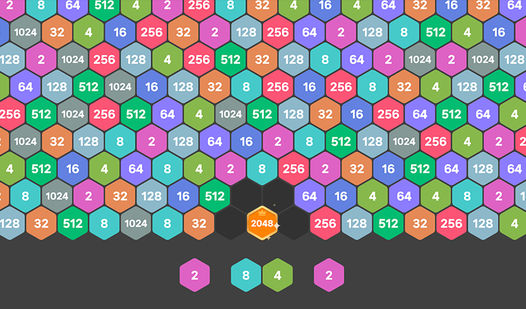
▶ Play FreeHexa Block 2048 implements the hexagonal grid concept with clean execution. Six-directional movement completely changes your strategic toolkit — you can no longer rely on corner anchoring in the same way, and learning to read hex adjacency is a satisfying new challenge.
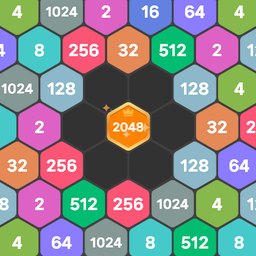
Hexa Block 2048
Drag and drop numbered tiles onto the grid to combine matching values and watch your score soar in this addictive puzzle challenge. You will quickly f...
▶ Play FreeCall Cat Nap 2048 wraps the merging mechanic in a sleepy, cat-themed aesthetic. The gameplay is solid, and the visual design is genuinely calming — good for unwinding while still keeping your brain engaged.
Call Cat Nap 2048
Fans of logic puzzles and fans of the creepy atmosphere found in poppy playtime will find a new obsession with Call Cat Nap 2048. This addictive exper...
▶ Play FreeBest Free 2048 Games to Play Right Now
Here's a selection of standout 2048-style games available free on FreeJoy.games:
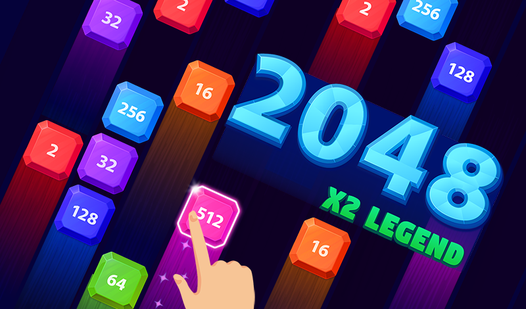
2048 X2 Legend delivers the authentic 2048 experience in a polished package. Smooth controls, clean interface, and a proper scoring system make this the go-to recommendation for players who want the classic feel without distractions.
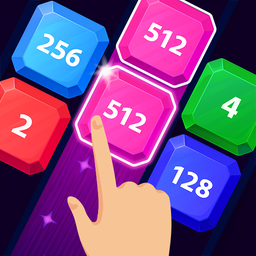
2048 X2 Legend
Logic puzzle enthusiasts will find their new favorite brain teaser in 2048 X2 Legend. This addictive title challenges you to merge blocks with matchin...
▶ Play FreeMerge the Planets of the Solar System 2048 replaces numbers with planets, progressing from small rocky worlds to gas giants and beyond. The educational dimension is a genuine bonus — you'll memorize planetary order by accident — and the space art makes each merge feel like an astronomical event.

Merge the planets of the solar system 2048!
Staring at a blank screen during a midday slump is a recipe for boredom that only a quick cosmic escape can fix. Merge the planets of the solar system...
▶ Play FreeBerry Garden 2048: Merge It All! combines the number-merging formula with a vibrant berry garden theme. Fruits pop and combine as you merge, and the visual feedback is immediately satisfying. The colorful presentation makes it particularly appealing if you want something lively rather than minimal.

Berry Garden 2048: Merge It All!
Matching logic puzzles take on a refreshing twist when you swap boring numbers for juicy, colorful fruit. Berry Garden 2048: Merge It All! challenges ...
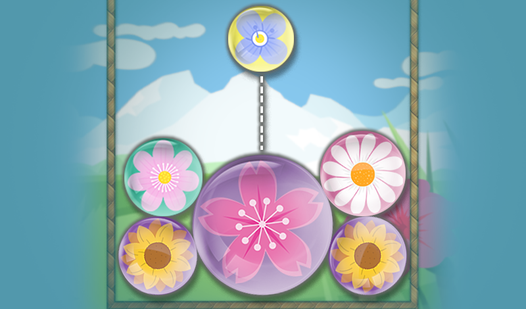
▶ Play FreeMerge the Flower Balls 2048 takes a softer, more meditative approach. The gentle pace and flower-based progression make it ideal for relaxed sessions. The merging mechanic is fully intact, but the overall atmosphere encourages a slower, more thoughtful style of play.
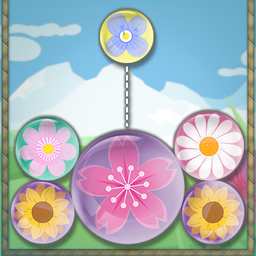
Merge the flower balls 2048
Drop vibrant spheres onto the playing field to fuse matching pairs and watch them evolve into beautiful flowers. Merge the flower balls 2048 challenge...
▶ Play FreeCommon Mistakes and How to Fix Them
Even players who understand the theory keep making certain errors. Here's a rapid-fire correction guide:
Mistake: Tiles scattered randomly without a pattern. Fix: Commit immediately to a corner and start building your chain. Random placement makes the board chaotic and nearly impossible to recover.
Mistake: Always swiping in all four directions equally. Fix: Establish primary and secondary swipe directions based on your chosen corner. Discipline over those four keys makes an enormous difference.
Mistake: Neglecting small tiles. Fix: Those 2s and 4s become 8s, 16s, 32s, and 64s. Actively pair them up rather than ignoring them until they cause problems.
Mistake: Racing toward 2048 instead of managing the board. Fix: Focus on keeping the board organized and maintaining open cells. The 2048 tile appears as a side effect of good play, not as the direct target of aggressive merging.
Mistake: Stopping at 2048. Fix: Keep playing. The strategies you've built up work even better on larger tiles, and the post-2048 game often produces the most satisfying runs.
Mobile, Desktop, and Tablet: Platform Notes
The strategy doesn't change across platforms, but the experience differs meaningfully.
Desktop gives you arrow keys — fast, precise, zero chance of an accidental swipe in the wrong direction. Most high-score attempts happen on desktop for exactly this reason. The larger screen also makes it easier to visualize the full board state.
Mobile works well with deliberate swipes, but sloppy diagonal swipes occasionally register as the wrong direction, which can ruin a carefully built arrangement. Keep your swipes clean and straight. Playing in landscape mode gives you a larger view of the grid.
Tablet is arguably the best platform for extended 2048 sessions. Large touchscreen, comfortable viewing angle, and a swipe surface big enough to be accurate. If you have a tablet available, it's worth using for serious play.
Why 2048 Still Holds Up in 2025
More than a decade after release, 2048 remains one of the most-played free puzzle games in the world. The reasons are worth understanding, especially if you're new to it and wondering why people keep coming back:
Instant accessibility: No tutorial, no onboarding, no loading screen. You understand the rules from the first two swipes. That immediate clarity is rare in games.
Genuine skill depth: Your score will measurably improve as you internalize the corner strategy and board management principles. That feedback loop — learning something, applying it, seeing results — is one of the most satisfying things a game can offer.
Perfect session flexibility: A game can last five minutes or an hour. Both feel complete. This makes 2048 genuinely portable in a psychological sense — it fits into whatever window of time you have.
Endless variety: The 2048 family keeps growing. Developers keep finding new themes, grid shapes, and mechanics to explore within the merging framework. You're never far from a version that fits your current mood.
No dead ends in learning: Unlike many games where you plateau and stop improving, 2048 keeps rewarding deeper understanding. Players who've been at it for years still have room to improve their personal bests.