Free Roguelike Games Unblocked at School
If you've been searching for free roguelike games unblocked at school, this guide has exactly what you need. Whether you've got a free period, a study hall that's more "stare at the ceiling" than actual studying, or just ten minutes before the bell, roguelikes are one of the best ways to fill that time. They're built for short sessions, they're endlessly replayable, and — in browser form — they work on any school computer without installing a single thing.
This article covers what roguelikes actually are, why they're such a natural fit for browser gaming, and which ones are genuinely worth your time right now.
What Are Roguelike Games
The term "roguelike" traces back to a 1980 game simply called Rogue — a dungeon crawler where you explored randomly generated maps, picked up loot, fought monsters, and died frequently. The key design idea wasn't the dying, though. It was what happened after: the map reshuffled, the items changed, and you started fresh with a completely new layout. No two runs were identical.
That single concept turned out to be enormously sticky. Over the following decades, developers kept layering new ideas on top of it, and today "roguelike" covers a wide spectrum. Some games stay close to the original: top-down dungeon crawlers with turn-based combat and permadeath. Others are "roguelites" — games that borrow the random generation and restart mechanics but let you carry some upgrades between runs.
What most share:
- Procedural generation — the world rebuilds itself every session
- Permadeath — dying means restarting, usually from scratch
- Meaningful choices — resource decisions and upgrade trade-offs that shape each run
- Short, intense arcs — most runs end in 10 to 30 minutes
That last point is particularly relevant when you're gaming between classes.
The genre has also spawned some genuinely surprising hybrids. Tower defense games with roguelike upgrade trees. Card-based deck builders with procedurally generated card pools. Platformers with randomized level layouts. Idle clickers that reframe the loop in terms of escalating challenges. If a game involves restarting with new random conditions and asking you to make real decisions along the way, it's somewhere in the roguelike family.
A great example of an unconventional entry is Brainrot School Quest — a chaotic school-escape game that throws you into randomized, absurd scenarios each run. It plays fast, ends dramatically, and immediately makes you want to try again with a different approach.
Why Roguelikes Work Great in Browsers
There's a reason roguelikes have found such a strong home on browser gaming platforms. The structure of the genre maps almost perfectly onto browser gaming constraints.
Runs are self-contained. Unlike an RPG where saving mid-dungeon is critical, or a strategy game where you're building over 90 minutes, a roguelike run has a clean start and a clean end. You die (or very occasionally win), and the session wraps up naturally. You're never left hanging mid-save when class resumes.
No installation required. Browser-based roguelikes load in seconds and run in a tab. No admin permissions, no storage space, no compatibility issues. On a locked-down school Chromebook or a Windows machine where you can't install anything, that's everything.
The skill curve stays engaging. Your first run in a roguelike is almost always rough — you'll die fast and confused. But each attempt teaches you something concrete. You start recognizing enemy patterns. You understand when to spend resources and when to hold. By run five you're playing noticeably better, and that progression keeps the game interesting across many short sessions.
Randomness prevents staleness. Coming back to a browser game after a few days can feel stale if nothing has changed. Roguelikes sidestep this entirely. The layout is different, the items rolled differently, and you have a fresh combination to figure out.
Geometry School: Fight With Russian Teachers nails this formula with a school-brawler format. The premise is deliberately absurd — you're fighting back against increasingly chaotic teacher encounters — but the run-restart loop underneath is surprisingly well-constructed. Each attempt plays differently, and the escalating weirdness keeps things from getting repetitive.

Geometry School: Fight With Russian Teachers
Navigate through a notebook universe where dodging projectiles from stern educators is the only way to earn top marks. Geometry School: Fight With Rus...
▶ Play FreeThere's also an emotional rhythm to roguelikes that makes them good for mental resets between classes. The cycle of trying, failing, learning, and trying again is a satisfying loop that has a clear resolution. A rough class followed by a 10-minute roguelike session that ends in a spectacular defeat can actually leave you in a better headspace.
Best Free Roguelike Games Unblocked at School
Here are the standout picks available right now — all browser-based, all free, and all accessible without any special setup.
The Crystal: Roguelike Tower Defense
Tower defense and roguelike progression are a natural combination, and this game makes the case for that pairing confidently. You set up defensive structures to hold off waves of enemies, but each round offers a random selection of upgrades. Which towers do you reinforce? Do you build wide coverage or double down on a single defensive line? The decisions stack quickly, and no two maps play out the same way.
The roguelike layer adds real tension to what could otherwise be a fairly passive genre. Losing your defensive line to a wave you misjudged stings — but you immediately know what you'd do differently. That clarity is the hallmark of well-designed roguelike feedback.
Schoolboy Escape! Hide & Seek in School
Stealth and roguelikes are a surprisingly natural pairing. In Schoolboy Escape, you're trying to sneak out of school without getting caught by patrolling teachers. The layout shifts between runs, patrol routes vary, and every failed attempt gives you new information about what to expect on the next one.
The school setting grounds it in a way that abstract dungeon crawlers often don't. You already know what a hallway looks like, what a cafeteria means, and what it feels like to freeze when a teacher looks your way. That familiarity sharpens the tension even in a browser game with simple visuals.
Schoolboy Escape! Hide & Seek in School
Fans of adrenaline-pumping stealth challenges will find themselves addicted to the tense corridors of Schoolboy Escape! Hide & Seek in School immediat...
▶ Play FreePlant vs. Zombies: Roguelike
If you've ever played the original PvZ, this one clicks immediately. The core mechanic is the same — plants defending lanes against zombie waves — but with roguelike upgrade systems layered on top. Each run gives you a randomized selection of available plants and power-ups. A build that dominated your last run might not even be available this time, which forces genuine improvisation.
It captures the "one more run" feeling the original PvZ always had, while adding strategic variety that keeps veterans engaged. New players will find the format approachable because the base mechanics are so intuitive; longtime fans will discover combinations they never considered in the original.
Plant vs. Zombies: Roguelike
Defend your patch of garden by tactically maneuvering your botanical hero against endless waves of invading zombie threats. You control the action dir...
▶ Play FreeMore School-Themed Games Worth Playing
Beyond the main picks, FreeJoy has a solid lineup of school-themed games with strong replay value. Here's a quick rundown:
Clicker Schoolboy Runaway is a fast idle-clicker built around escalating school escape scenarios. It's minimal in input but satisfying in progression — ideal for sessions where you want the game to mostly run itself while you think.
Sprunki: School Merge Evolution takes a merge-puzzle approach using school characters that evolve through combinations. The randomized merge outcomes give it that roguelike "what will I get this time" quality, even if it sits closer to puzzle territory than dungeon crawling.
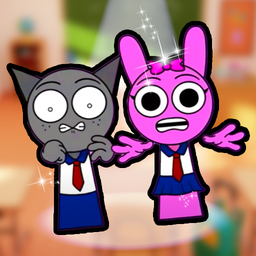
Sprunki: School Merge Evolution
Casual gamers who enjoy satisfying progression loops will find their new obsession in Sprunki: School Merge Evolution. This quirky simulation challeng...
▶ Play FreePaper School FPE offers a first-person school exploration experience with a distinctive lo-fi paper art style. If you appreciate unusual visual approaches and slower-paced exploration, this one stands out from the typical browser game crowd.

Paper school FPE
Staring at a blank screen during your lunch break is a recipe for boredom when you just need a quick mental reset. Paper school FPE is the perfect dig...
▶ Play FreeItalian Brainrot at School leans hard into internet-absurdist humor set against a school backdrop. It's chaotic, unpredictable, and exactly the kind of game you'd describe to a friend as "I really can't explain it, you just have to play it." The chaos is the feature.

Italian Brainrot at School
School hallways are never just for studying when you have a secret agenda of chaos to pursue. Italian Brainrot at School transforms the typical studen...
▶ Play FreePoppy Playtime at School brings the toy-horror aesthetic into a school environment. If you enjoy tension-filled exploration and moments that make you flinch, this delivers both in a format that works well in short bursts.
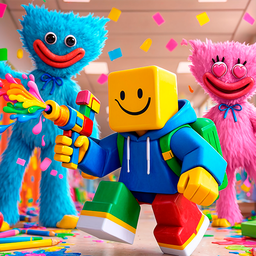
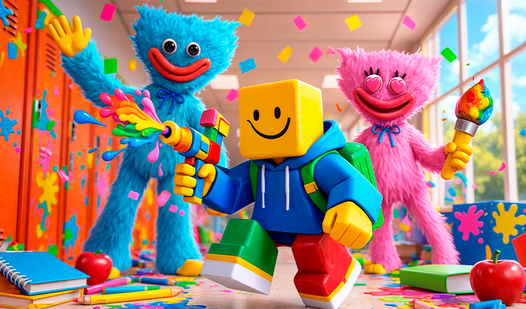
Poppy Playtime at School
Surviving a school day has never felt this intense, especially when your teachers are monsters and the hallways are filled with traps. Poppy Playtime ...
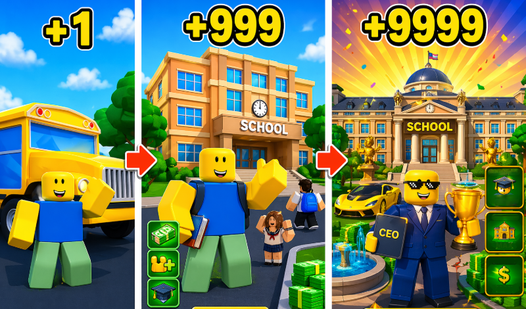
▶ Play FreeNubik Obbik: School Tycoon flips the premise entirely — instead of escaping from school, you're building and running one. The tycoon format still has that run-by-run decision loop even outside traditional roguelike structure.
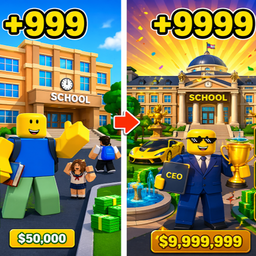
Nubik Obbik: School Tycoon.
Fans of creative management simulators and roblox style adventures will find their new obsession here. Nubik Obbik: School Tycoon challenges you to tr...
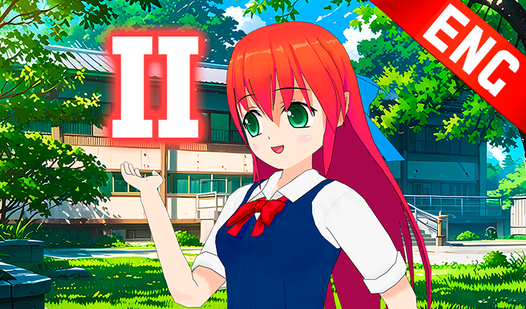
▶ Play FreeSchool Love Story #2 is a branching narrative game set in school. The story structure shifts based on your choices, and replaying reveals paths you didn't take the first time. The "what if I had chosen differently" quality gives it light roguelike energy.

School Love Story # 2
Fans of interactive narratives and romantic drama will find themselves completely swept away by the sun-drenched atmosphere of School Love Story # 2. ...
▶ Play FreeRoguelike Games With RPG and Dungeon Elements
The deepest end of the roguelike spectrum is the dungeon crawler subgenre — games where you descend through procedurally generated floors, manage a growing inventory, and face increasingly dangerous enemies. These are closest in spirit to the original Rogue and tend to be the most strategically demanding.
What makes dungeon-crawl roguelikes compelling is the resource pressure. You enter each floor with a fixed set of items and abilities. Enemies drain your health and consumables. New items present choices — do you take the offensive upgrade or the defensive one? Do you spend gold on a shop item now or gamble that the next floor will offer something better?
That constant trade-off creates a kind of satisfying mental strain. You feel clever when a build comes together unexpectedly. You feel the exact mistake that ended a run the moment after you make it. Both experiences are rewarding in different ways, which is why players return so reliably.
For players coming from RPGs, roguelikes feel like the combat and character-build systems extracted from a larger game and run at full intensity. There's no story padding, no travel time between objectives, no mandatory cutscenes. Just decision-making and consequence. That compression is what makes the genre work so well in short browser sessions — there's nothing to skip past.
A few qualities that distinguish good dungeon-crawl roguelikes from mediocre ones:
Enemy variety that requires actual responses. The best roguelikes ask you to think differently about each enemy type. A slow, tanky enemy and a fast, fragile one should demand different strategies, even if neither is individually complex.
Multiple viable build paths. If every successful run looks identical — same strategy, same item priorities — the game has failed at the core premise. Good roguelikes have several paths to victory that feel genuinely different to play.
Transparent cause of death. You should always understand why a run ended. Damage that feels random, enemies that one-shot without warning, or rules that are never explained create frustration rather than engagement. The best roguelikes are punishing but legible.
Scaling that feels earned. Early floors build confidence. Later floors test everything you've learned. The difficulty spike should feel like a logical consequence of your choices, not like the game decided to be unfair.
These criteria are also useful for evaluating any new roguelike you pick up. If a game consistently fails on "transparent cause of death" — if dying feels arbitrary rather than instructive — it's not worth replaying.
The Crystal: Roguelike Tower Defense (covered earlier in this article) applies these principles well in a browser context, adding genuine floor-by-floor resource tension to the tower defense format without losing the accessibility that browser games need.
Tips for Surviving Your First Roguelike Run
New to the genre? Here are some concrete adjustments that will help you stop dying immediately.
You don't have to fight everything. This is the most common early mistake. Some enemies are designed to be avoided, not defeated. If a fight looks unfavorable — they're stronger, you're low on health, the positioning is bad — skip it. Come back later or go around entirely.
Read item descriptions before picking. Roguelikes front-load their decisions. A choice you make in the first five minutes can define the entire run. Players who rush past item text frequently die to consequences they didn't notice they were creating.
Pick a direction and commit. You learn faster by trying to execute one specific strategy than by grabbing random items and hoping something emerges. "I'm building around speed and evasion this run" beats "I'll just take whatever looks good." Focused builds also make it clearer when a run is failing and why.
Treat death as information. Every run that ends early tells you something specific. What killed you? Were you low on health before a major encounter? Did a specific enemy type consistently outpace your defenses? Note it mentally and apply the lesson next attempt. The feedback loop is the actual game.
Use resources when you need them. New players almost universally hoard healing items waiting for a "real" emergency. Then they die at half health with three unused potions in their inventory. Resources have no value after you die. If you need healing now, use the item.
Short failed runs are still good sessions. You don't need to win — or even come close to winning — for a roguelike session to be satisfying. A 12-minute run that ends badly is still a complete arc with its own tension, decisions, and lessons. That's the format working correctly. Expecting every session to end in victory misunderstands what the genre is.
Watch for item synergies. The most memorable moments in roguelikes happen when two items interact in a way you didn't expect. Learning what combinations are powerful — and in which games the synergy systems run deepest — is a large part of mastering the genre over time. Some of the best discoveries come from runs where you grabbed something you normally wouldn't.