Best Geometry Dash Fan Games: Free Browser Picks
If you've spent any time around rhythm platformers, you already know the appeal of Geometry Dash — the satisfying crunch of a perfect run, the frustration of dying three seconds from the finish line, and the obsessive urge to try again. But what happens when you've cleared every level and still want more? That's where the best geometry dash fan games come in. A whole community of developers has built browser-based alternatives, mods, and spinoffs that capture the same electric energy — and you can play all of them free, right now, without installing anything.
This list covers the top picks worth your time: clickers, wave-mode variants, playground sandboxes, and genuinely weird hybrids that do something fresh with the formula. Whether you're chasing that next dopamine hit or just curious what the fan scene has cooked up, there's something here for you.
Best Geometry Dash Fan Games to Play Free
Let's start with the games that sit closest to the original experience — titles that feel like they were made by someone who logged thousands of hours in GD and decided to build their own version.
Dash Geometry: Leveling Up
This one deserves top billing. Dash Geometry: Leveling Up takes the core geometry platformer loop and adds a full progression system on top. You don't just run and die — you earn upgrades, improve your character's stats, and unlock new abilities that actually change how you play. The jump timing, obstacle density, and visual style all feel authentically Geometry Dash, but the RPG layer gives every run a sense of purpose beyond pure survival.
The level design gets genuinely creative in the later stages. Early on you're dealing with familiar spikes and platforms, but as you upgrade and push further, the game starts throwing multi-layered obstacles that require timing and the right build. It's the kind of game that makes you want to grind — not because you have to, but because seeing new upgrades unlock is satisfying in its own right.
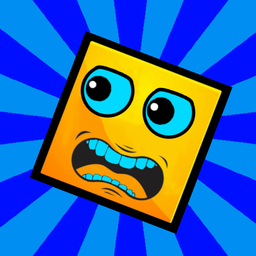
Dash Geometry: Leveling Up
Fans of high-speed platformers will find their new obsession in Dash Geometry: Leveling Up, a thrilling evolution of the classic rhythm-based challeng...
▶ Play FreeGeometry Dash: Ultra Mega MOD Playground!
If you've ever wanted to just mess around in the Geometry Dash universe without the pressure of dying every ten seconds, this playground mode delivers. Geometry Dash: Ultra Mega MOD Playground! lets you experiment with different characters from the GD world, try out mechanics, and explore without a strict fail state hanging over you.
It's a great pick for players who want to get comfortable with geometry platformer controls before jumping into more punishing runs. The sandbox approach also means you can spend time learning obstacle patterns in a low-stakes environment — which pays dividends when you move to harder fan games or go back to the original.

Geometry Dash: Ultra Mega MOD Playground!
Experiment with chaotic physics and unique characters in this wild sandbox arena. You drag icons onto the field to spawn units, weapons, and portals t...
▶ Play FreeGeometry Dash evolution: Clicker
Here's where things get interesting. Geometry Dash evolution: Clicker pulls the GD aesthetic into clicker territory — same visual language, same cube-and-spike energy, but now it's about building up power through clicking and progression. It's surprisingly addictive. The idle clicker loop works well with the Geometry Dash theme because the sense of escalation matches the increasingly intense levels you're used to.
If you've ever played an incremental game and thought "I wish this had more style," this hits the spot. The nods to the original game are everywhere — visual design, audio cues, the overall aesthetic — which makes it feel like a genuine piece of the fan game ecosystem rather than a cash-in on the name.
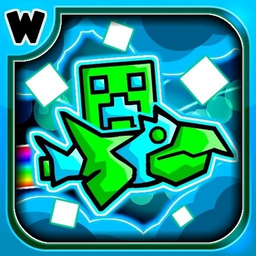
Geometry Dash evolution: Clicker
Clicker games offer a unique way to turn simple taps into massive progress and satisfying rewards. Geometry Dash evolution: Clicker takes this addicti...
▶ Play FreeGeometry Dash: Evolutional Clicker!
A separate take on the clicker concept, Geometry Dash: Evolutional Clicker! structures itself around level completion rather than pure idle mechanics. You work through stages, earn points, spend them on upgrades, and push your way through an escalating difficulty curve. It feels more like a proper game than a pure idle experience — you're actively engaged rather than just watching numbers grow.
The upgrade tree is well-designed, offering meaningful choices rather than just "click the biggest number." Players who like to optimize will find genuine depth here, while casual players can just click their way through at a comfortable pace without much theory-crafting.

Geometry Dash: Evolutional Clicker!
Staring at a blank screen during a midday slump is the worst, but a quick dose of adrenaline is just a few clicks away. Geometry Dash: Evolutional Cli...
▶ Play FreeGeometry Mayhem
Something different. Geometry Mayhem drops the traditional platformer structure and throws you into a neon void with a rogue AI as your antagonist. The pace is relentless — obstacles come fast, the visual design leans heavy into the neon aesthetic, and the game doesn't give you much time to breathe.
It shares the core geometry game DNA: clean shapes, precise timing, unforgiving hit detection. But the rogue AI framing gives it a slightly different energy than the standard "cube runs through a level" format. If the best geometry dash fan games are defined by capturing that frenetic rush, Geometry Mayhem absolutely qualifies.
Rhythm-Based Browser Platformers
The heart of what makes top games geometry dash-adjacent is the rhythm element. It's not just about reacting to obstacles — it's about feeling the beat, letting the music guide your jumps, and hitting that flow state where your fingers move on autopilot. These games chase that same feeling through different mechanics.
What Makes Rhythm Platformers Click
The rhythm platformer format works because it layers two types of satisfaction: the visual/mechanical satisfaction of clearing an obstacle, and the auditory satisfaction of timing that clear to the music. When both align — when your jump lands exactly on the beat — it creates a feedback loop that keeps you coming back.
Browser fan games have gotten genuinely good at replicating this. The audio design in many of these titles is tight enough that you can actually use the music as a timing guide, not just background noise. That's harder to pull off than it sounds, and the best geometry dash fan games get it right.
Geometry Dash Wave: Original
The Wave gamemode is one of Geometry Dash's most beloved mechanics — continuous movement that you steer rather than discrete jumps. Geometry Dash Wave: Original focuses entirely on this mode, building a full game experience around the wave mechanic that many players find more satisfying than standard cube runs.
The challenge here is the precision required. Wave mode punishes micro-corrections that are off by even a tiny margin. But when you're locked in and the wave is flowing smoothly through a tight corridor, it's one of the best feelings a geometry platformer can offer. This is a great pick if you've always preferred wave levels over cube sections.
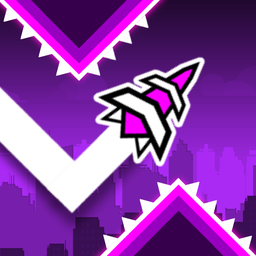
Geometry Dash Wave: Original
Staring at a blank screen while your coffee cools is the universal sign that you need a major productivity break right now. Geometry Dash Wave: Origin...
▶ Play FreeCool Dash
Sometimes a game earns its place on a list just by being genuinely fun to play. Cool Dash is a clean, polished browser platformer that doesn't overcomplicate things — it delivers the dash platformer experience with good level design, responsive controls, and enough visual style to make it enjoyable to look at while you're dying repeatedly.
It's the kind of game you recommend to someone who's never played Geometry Dash and wants to understand the appeal. Accessible enough for newcomers, has enough depth to keep experienced players engaged for more than a few minutes.
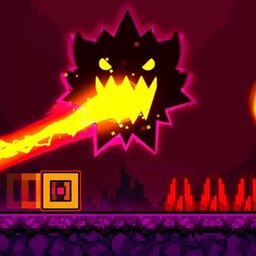
Cool Dash
Matching games are the ultimate way to test your reflexes while keeping your brain sharp and entertained. Cool Dash takes this classic concept and add...
▶ Play FreeGeometry Click: Demon Evolution
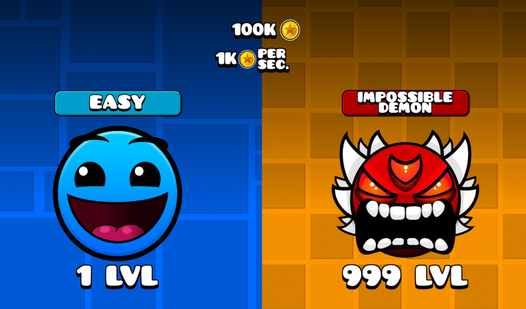
Merging the clicker progression format with the Demon difficulty tier of Geometry Dash, Geometry Click: Demon Evolution is aimed squarely at players who've spent time in the harder end of GD's difficulty spectrum. The Demon levels in the original game are a badge of honor — completing them puts you in a specific club. This game uses that mythology as its progression backbone.
The result is a clicker with genuine identity. It's not just a generic incremental game reskinned with GD art — the Demon theme informs the design in ways that fans of the original will recognize and appreciate.
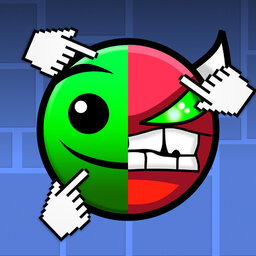
Geometry Click: Demon Evolution
The satisfying rhythm of clicking demons makes Geometry Click: Demon Evolution a digital stress-reliever that keeps you glued to the screen. Every suc...
▶ Play FreeGeometry Dash Alternatives with Unique Twists
Not every entry here is a straight clone or a faithful fan recreation. Some of the best games in this space take the geometry platformer template and do something genuinely unexpected with it. These titles are worth playing specifically because they go somewhere different.
Black Hole in Geometry Dash — Destroy Everything!
This one has a premise that the title describes perfectly. Black Hole in Geometry Dash — Destroy Everything! flips the survival script — instead of navigating carefully to avoid destruction, you're the destructive force. The power fantasy element here is a genuine breath of fresh air after hundreds of careful, precise runs.
It uses the Geometry Dash visual language effectively, so it feels like it belongs in the same ecosystem even though the gameplay loop is inverted. Great palette cleanser if you're tilted from dying on the same obstacle for the fifteenth time.
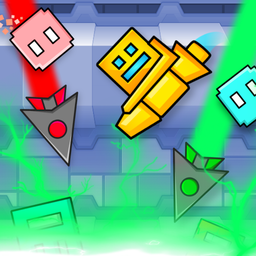
Black Hole in Geometry Dash - Destroy Everything!
Feed a ravenous void by tossing iconic characters and objects into the swirling abyss of Black Hole in Geometry Dash - Destroy Everything! This addict...
▶ Play FreeGeometry MOD 2: Chips and Cola!
Geometry MOD 2: Chips and Cola! brings a lighter, more humorous aesthetic to the geometry platformer format. The visual design leans into the absurdity — the "Chips and Cola" theme is exactly as silly as it sounds — but the underlying gameplay is solid. Good level design, proper rhythm timing, and enough of the core GD feel to satisfy fans of the original.
This is also a good pick if you've been playing intense, high-difficulty stuff and want something that doesn't take itself too seriously. The playful presentation makes deaths feel less like failures and more like part of the joke.

Geometry MOD 2: Chips and Cola!
Feed cubes with chips and cola to trigger explosive reactions in Geometry MOD 2: Chips and Cola! Watch as your subjects gain critical mass and burst i...
▶ Play FreeGeometry MOD 4: Slime Dash
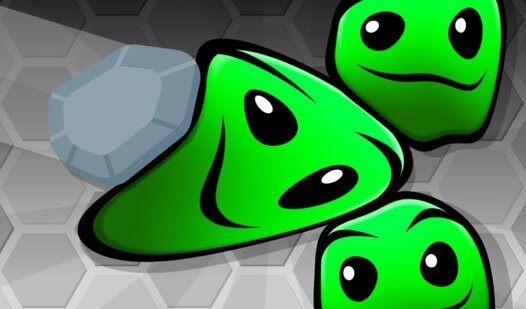
Geometry MOD 4: Slime Dash swaps the cube for a slime character, which changes the feel of the movement in ways that are subtle but real. Slime physics add a slight bounciness to the gameplay that makes familiar obstacle patterns feel fresh. It's a small change that has a bigger impact on the experience than you'd expect.
The level design takes advantage of the slime mechanic rather than just reskinning standard GD levels. Obstacles are positioned with the bouncy physics in mind, and you'll find yourself adjusting your timing slightly from what you'd use in the original game.
Geometry MOD 4: Slime Dash
Fans of physics-based puzzles will find endless enjoyment in the chaotic world of Geometry MOD 4: Slime Dash. This quirky title challenges you to clea...
▶ Play FreeMeger Geometry Dash
Meger Geometry Dash is a community-made take on the formula that brings its own level design sensibility to the table. Fan-created levels often have a different energy than official content — they're made by people who love the game deeply enough to build their own version, and that passion tends to show in the design choices.
This one has some creative obstacle arrangements that will catch even experienced GD players off-guard. The visual style stays close to the original, which makes it feel familiar, but the level layouts have a handcrafted quality that distinguishes it from a simple clone.
Meger Geometry dash
Merging games turn simple logic into an addictive cycle that keeps players clicking for hours. Meger Geometry dash reinvents this experience by forcin...
▶ Play FreeTips for Mastering Geometry Platformers
Playing the best geometry dash fan games isn't just about reflexes — there's a mental approach that separates players who plateau from those who keep improving. Here's what actually works.
Learn the Level, Not Just the Obstacles
The biggest mistake newer players make is trying to react to every obstacle as it appears. At higher speeds, you simply can't react fast enough — by the time you see the spike, it's already too late. The fix is memorization. Each run isn't about surviving; it's about learning the layout so your muscle memory can handle it without conscious thought.
This is why dying on the same obstacle 30 times is actually progress, not failure. You're burning the pattern into your hands. By run 30, you're not reacting to that obstacle anymore — you're anticipating it.
Use the Music
This sounds obvious, but most players underuse it. The music in these games isn't decoration — it's a timing guide. Obstacles almost always sync to the beat, which means if you internalize the rhythm, you'll know when to jump before you see the obstacle clearly. Put on headphones if you can. Good audio quality makes a real difference in how well you can use the music as a guide.
Adjust Your Practice Strategy
When you're stuck on a specific section, focus on that section specifically. Many of these browser games have practice modes or let you restart from checkpoints — use them. Running the full level from the start repeatedly is a slow way to learn a problem section. Isolate it, grind it specifically, then integrate it back into the full run.
Manage Your Frustration
This might sound like life advice rather than gaming advice, but it's genuinely relevant. The brain learns worse when stressed. Taking a short break after a bad streak of deaths is often more efficient than grinding through the frustration — you'll come back fresher, and the muscle memory you built before the break often consolidates during the break.
The players who improve fastest in geometry platformers are usually the ones who can stay calm during difficult sections. Easier said than done, but worth practicing.
Play Variety
Playing the same game endlessly can actually slow your improvement by narrowing your skill set. The fan games and alternatives on this list have slightly different timings, physics, and mechanics. Playing across several titles keeps your reactions adaptable and prevents you from over-fitting your skills to one specific game's quirks.